Purpling of Leaves
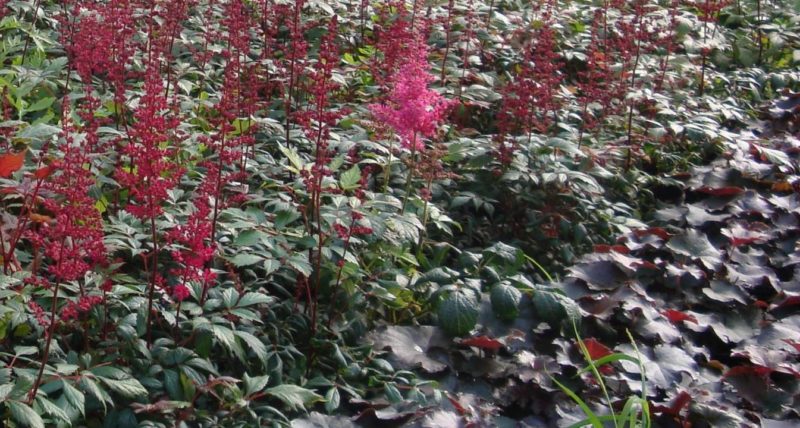
Many annual bedding plants and herbaceous perennials have red, purple or almost black foliage, including fountain grass, ornamental millet and some varieties of coleus, sweet potato vine, New Guinea impatiens, coral bells, kale and ornamental pepper. Some vegetable crops do too, such as red-leaf lettuce and purple basil.
While these crops display their attractive purple coloration when grown outside, sometimes they lack the desired pigmentation when grown in greenhouses or indoor farms. There are also specialty crops that normally have green leaves, but at least some turn purple when environmental or cultural conditions are unfavorable. This article briefly reviews the factors that influence the purpling of leaves.
The purple color in leaves comes from pigments called anthocyanins. These pigments also give many red- and purple-colored fruits and flowers their color, as well as tree species that turn a reddish color in autumn. The concentration of anthocyanins is influenced by several factors, including environmental conditions (especially light and temperature) and the pH and presence of metal ions (such as iron and magnesium) in the growing substrate. Conditions that increase the biosynthesis of anthocyanins will increase the leaf coloration. In addition, chlorophyll can mask anthocyanins, so conditions that degrade chlorophyll can make leaves appear purple.
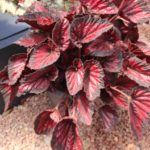
High light intensity. One of the most effective ways to increase purple leaf coloration is to provide high light levels to plants (Figure 1). Anthocyanins are protective compounds that shade and protect plants from excessive light, and their production and hence purple coloration increase with light. In addition to increasing pigmentation, they also make plants more resilient to some insect and disease pests and can improve stress tolerance. Inside greenhouses, light intensity can be increased by delivering supplemental lighting and/or by increasing the transmission of sunlight to the crops.
Light quality. While an increase in light intensity can increase the purple coloration of leaves, the most effective wavebands are blue and ultraviolet (UV) light. Blue and UV photons have high energy, and so anthocyanin production is triggered more than photons with less energy (green and red light). Only about 5% of the light emitted by high-pressure sodium lamps is as blue light, and thus they are not as effective at increasing coloration as light-emitting diode (LED) fixtures that emit at least 10 to 15% blue light. In contrast, far-red light can directly and/or indirectly decrease anthocyanin concentration.
Low temperature. A cool growing environment can increase anthocyanin accumulation, while high temperatures can reduce their concentrations. A combination of low temperatures and high light will often produce the darkest purple leaves on crops, while low light and high temperatures often fail to induce purple pigmentation.
Sub-optimal root zone. Crops that normally have green leaves outdoors can have purple leaves when produced in greenhouses if the root zone is not properly managed. Lower-leaf purpling, especially along the margins, can occur when there is a phosphorus deficiency. Since most fertilizers deliver more than adequate amounts of phosphorus, a phosphorus deficiency typically occurs when a grower is intentionally limiting its supply to inhibit extension growth, such as feeding with only 15-0-15. Other conditions can limit phosphorus uptake, such as a low pH, a poor root system, an excessively wet substrate, or a low substrate temperature. These conditions can lead to insufficient uptake of phosphorus, and thus growth, even if it is not limiting in the substrate. Low temperature (for cold-sensitive plants) and high light (for shade plants) can also induce purpling of green-leafed plants.
Purple it up (or down). The purple coloration of plants is most important when crops are ready for the market. The biosynthesis of anthocyanins occurs quickly, and coloration of leaves can be induced in as few as five to seven days. Therefore, whether crops are grown in greenhouses or indoor farms, leaves can be purpled by exposing plants to high light (and preferably cool temperatures too) for several days before shipping. This can be done by delivering end-of-production lighting or, when the weather permits, by placing plants outdoors for several days. If leaves are purple but shouldn’t be, ensure the root systems are healthy, adequate phosphorus is present in the substrate, light levels aren’t too high, and temperatures are not too low.

 Video Library