

How good substrates can go bad with improper management
Water management — not the substrate itself — is often the root cause of plant performance issues. This article breaks down how irrigation, fertilizer and substrate choices interact, and what growers can do to avoid costly mistakes.





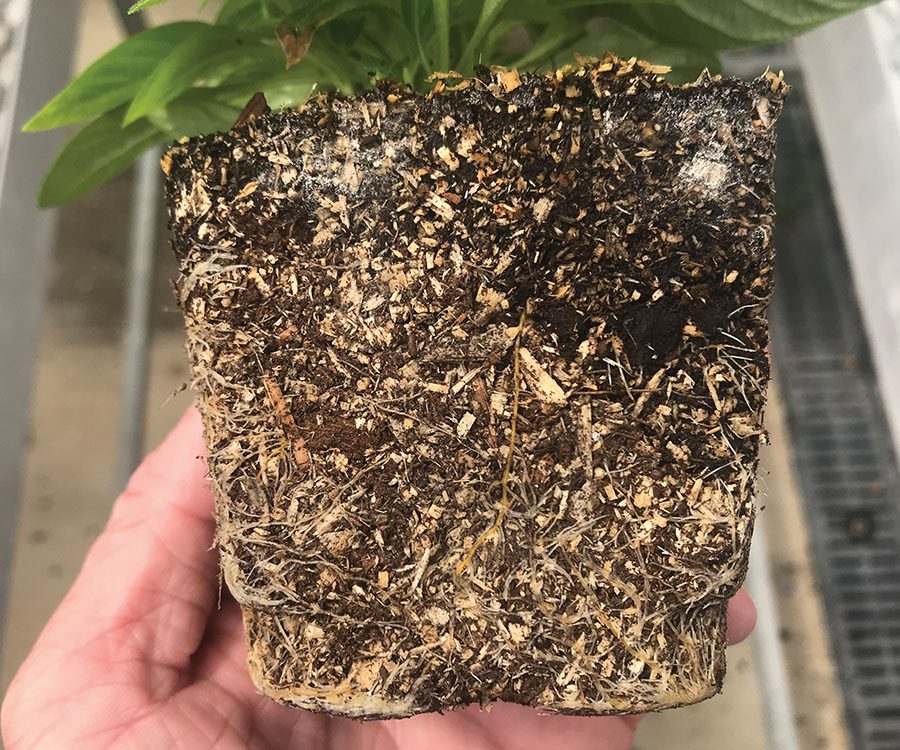
- Water management — not substrate — is the top cause of grower issues
- Overwatering creates conditions for root diseases
- Most growers use at least two substrate mixes
- Fertilizer must match both water quality and substrate chemistry
- pH management is critical, especially in long crop cycles
- Substrate choice should align with growing environment conditions
Most ornamental greenhouse growers are purchasing ready-to-use substrate mixes. The growers mixing in-house substrates tend to be larger operations with the capital to invest in the equipment and facilities to store individual components as well as the mixes they are preparing.
“Some larger growing operations source the raw materials and do their own blending and testing,” said Brian Jackson, professor and director of the Horticultural Substrates Laboratory at North Carolina State University. “They usually use peat, perlite, coir and wood fiber collectively. Most growers try to use as few components as possible. I’m a strong believer in a binary mix, having only two components.”
While there is a cost savings to producing your own mixes, Jackson said the challenge comes when growers are turned into substrate manufacturers.
“Growers have to monitor and check the blending rates, make sure the component mixing lines are working properly, the component doses are correct, and the mixing is consistent,” he said. “They also have to deal with raw material sourcing and storage. There are other costs, time and resource issues associated with growers blending their own mixes. Nothing is absolute even when ordering the same components from the same companies year to year. And that’s despite the component suppliers’ efforts to offer the most consistent reproducible products.”
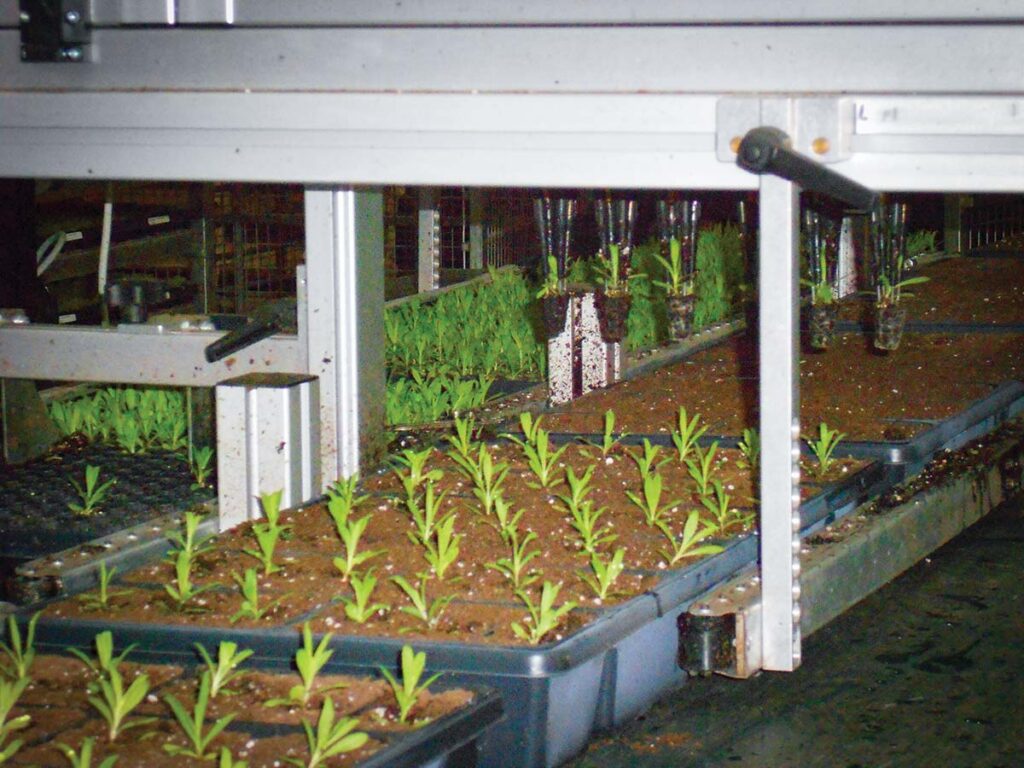
HOW MANY MIXES ARE GROWERS USING?
Most ornamental plant growers use at least two different substrate mixes.
“One mix is usually for propagation and the other is a growing-on mix for the rest of their crops,” said Harrison Meekins, grower specialist, Southeast, at Sun Gro Horticulture. “If they aren’t doing their own propagation, they are still often using two mixes. One will be for high- porosity crops that need more aeration in the root zone. A second mix would be used for more standard crops, including bedding plants.
“Growers may also use different mixes for different crops or seasons. These could be mixes with a low, medium or high porosity. If growers are producing poinsettias every year, they may use a more porous mix. The rest of the year they may use a different growing-on mix that might have less porosity to it. Most of it will be crop dependent because certain crops have specific substrate requirements.”
WATER MANAGEMENT IS THE BIGGEST ISSUE
While substrate manufacturers are constantly working to deliver a consistent, quality product to their grower customers, issues do arise.
“Oftentimes, the problems growers encounter aren’t related to the substrate as much as the management practices of the substrate itself,” Meekins said. “The number-one issue is related to irrigation and water management. There can be a big difference in the amount of water one grower applies compared to another that may be producing the same crop.”
Meekins said the main reason overwatering is such an issue is it creates an environment in the root zone where the balance is shifted to favor disease.
“Low oxygen and high moisture are going to lend themselves to favor root-borne pathogens, including fusarium, rhizoctonia, pythium and phytophthora,” he said. “This is something I talk with growers about a lot, because fusarium spores can be found just about everywhere.
“The fungus doesn’t become a problem until the root zone environment shifts to favor the growth of the pathogen over the growth of the plants. That typically happens when a substrate is very waterlogged. Overwatering sets the plants up for an environment where it’s not as conducive for the plants to grow and outcompete the root-borne pathogens that are present.”
Overwatering also wastes resources.
“Many growers still hand water, so it is really labor resources that are being wasted and not so much the cost of the water itself,” he said. “It is difficult to train employees on how much water to apply. It’s kind of a natural inclination to not let the plants dry out. It can also be difficult to determine how much water has penetrated into the substrate just from visual cues.
“There is this mentality that if water is seen running out of the bottom of the pots, then the substrate is saturated. Overwatering occurs much more frequently when plants are hand-watered vs. the use of some type of automated irrigation. I’ve been in greenhouses where overhead sprinklers or drippers were being run too often or for too long, but that issue is much easier to correct.”
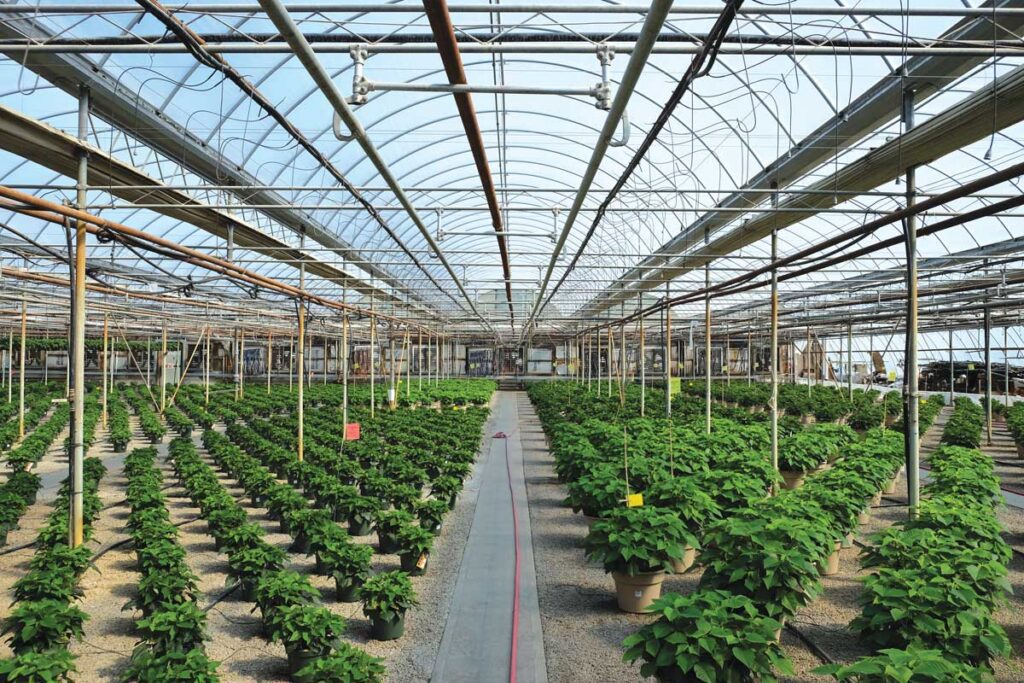
MATCHING THE FERTILIZER TO WATER, SUBSTRATE
Meekins said fertility management is another common issue related to water.
“In terms of a substrate’s physical and chemical properties, we look at the water quality and fertilizer first,” he said. “This entails matching a water-soluble fertilizer to the irrigation water and the substrate. An example is coconut coir that starts off with a higher pH than peat- based substrates. A grower may use a water-soluble fertilizer that is high in nitrate. The more nitrate that is applied is going to increase the pH. The more ammoniacal fertilizer that is applied is going to lower the pH. Especially for growers who have crop cycles that are longer than 12 to 16 weeks, that is usually when problems can start. Growers are not matching their substrate or their water quality with the right type of fertilizer.”
High-alkalinity well water can worsen pH issues.
“Often the well water growers are using has a high alkalinity,” Meekins said. “If these growers are not neutralizing that alkalinity with their fertilizer, as they start to apply the fertilizer solution to the substrate, the pH can creep up. Nutrient lock-out can occur because the substrate pH is too high, so the nutrients are no longer soluble and available to the plants.”
Meekins said wood fiber substrate components usually have a higher starting pH than peat-based substrates.
“Many wood fiber substrates are moderately acidic, around or just below 6, similar to coconut coir,” he said. “Pine bark has a pH that can range from the low to the mid 5s to the low or mid 6s. Peat is naturally the most acidic of these substrate components. Most of the popular nitrate-based fertilizers that growers are using are going to be compatible with peat-based substrates. Unamended peat starts off with a pH around 3.5 to 4.5. Adding lime raises the pH so it’s closer to an optimum range of 5.3 up to 6.3. Lime provides buffering to keep the pH in range over the duration of the crop cycle.”
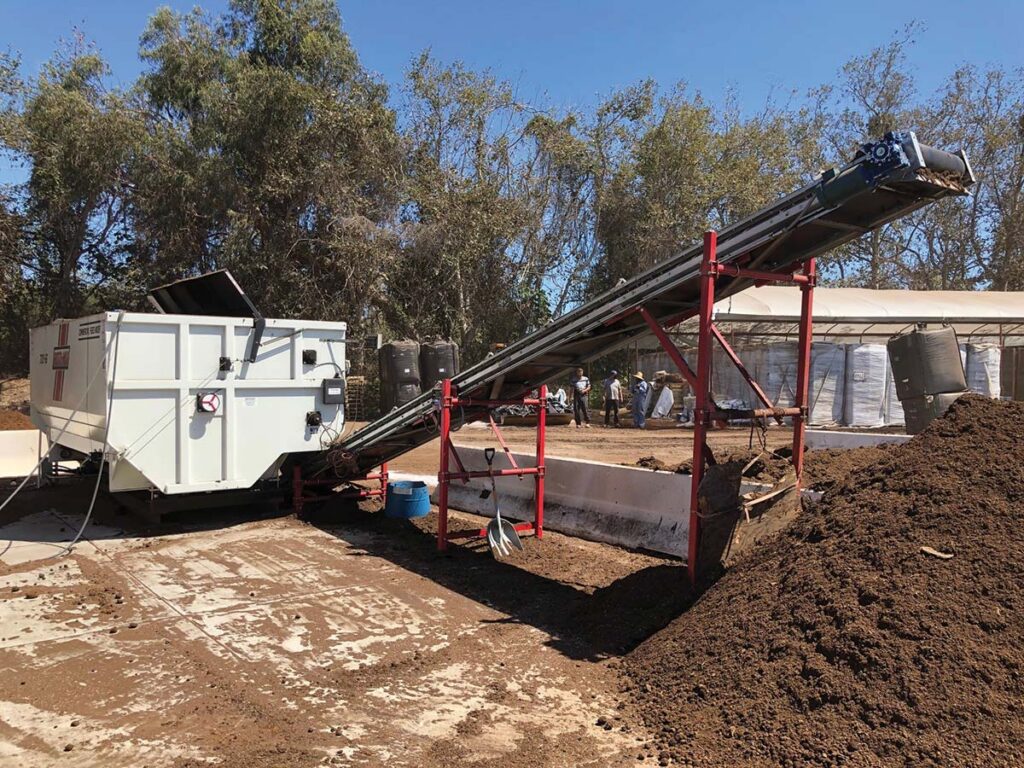
MATCHING SUBSTRATE TO GROWING ENVIRONMENT
Growers also need to select the correct substrate for the environment in which the plants are grown.
“For plants with long-term crop cycles and outdoor production, I start to lean growers toward bark-based mixes,” Meekins said. “Bark provides more long-term structure, so the mix doesn’t break down as quickly.
“A mix of peat and perlite used outdoors in Florida — where there is high light and humidity, hot temperatures, and a lot of precipitation — the peat starts to break down fairly rapidly, especially if the plants are kept outdoors for a period of time. A lot of settling and compaction can occur, which leads to a restriction of root growth and reduced oxygen levels in the root zone. Mixes with more drainage also tend to be more forgiving in outdoor environments with high precipitation. It is much easier to add water to a substrate than remove it.”
FAQ
Why is overwatering harmful?
It reduces oxygen in the root zone and promotes disease pathogens.
What is the most common substrate issue for growers?
Improper water management, especially overwatering.
How many substrate mixes do growers typically use?
Most use at least two — one for propagation and one for growing-on.
How does fertilizer affect substrate pH?
Nitrate fertilizers raise pH, while ammoniacal fertilizers lower it.
Why is substrate choice important for outdoor growing?
Some materials break down faster, leading to compaction and poor root conditions.
David Kuack is a freelance technical writer in Fort Worth, Texas. He can be reached at dkuack@gmail.com.