Home » Managing cool-season diseases in ornamental greenhouse production
Greenhouse Product News February 2026
Managing cool-season diseases in ornamental greenhouse production
Protect ornamentals from botrytis, pythium and phytophthora as spring production time approaches. Learn prevention strategies to safeguard crops.
By Nancy Rechcigl
4 minute read
Winter greenhouse conditions are marked by lower light levels, cooler temperatures and higher humidity, creating an environment where many pathogens thrive. While many crops, such as geraniums and pansies, prefer cooler temperatures, cool-season conditions also favor destructive diseases such as Botrytis blight and root rots caused by Pythium spp. and Phytophthora spp. While all ornamental crops are susceptible, certain crops require more frequent scouting, especially high-value crops like bedding plants, perennials and woody ornamentals.
BOTRYTIS
Botrytis blight, commonly known as gray mold, is the most prevalent disease threatening ornamental crops. Caused by the fungus Botrytis cinerea, this pathogen can colonize both living and dead plant tissue, and thrives in cool, humid environments that are typical from fall through winter. Young plant material such as seedlings and cuttings are especially vulnerable, as are crops in postharvest conditions where high humidity and excess moisture allow infections to spread rapidly. This is a critical consideration for finished plants that have been or will be boxed, stored or transported. Protective treatments prior to shipping can help minimize disease outbreaks.Disease risk increases during periods of extended cloudy, damp weather or when humidity levels exceed 85%, exposing leaves to prolonged wetness for four or more hours per day. When scouting, look for the early signs of infection:
Small, light brown spots or tiny flecks on flowers
V-shaped, tan-brown lesions on foliage
Sunken, discolored cankers on stems
Brown flower buds that appear water-soaked
Fuzzy brown or gray spores
Plant wilting due to stem rot.
1
2
3
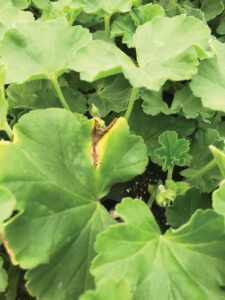
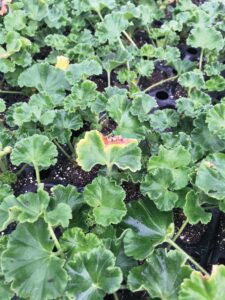
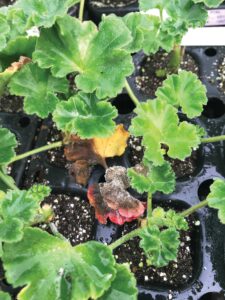
(Shown above) Progressive botrytis development on geranium plants, from a small lesion with yellowing on a leaf (1) to advanced stages with fuzzy, gray mold visible (3).
Botrytis has a high potential to develop fungicide resistance, so it is important to follow an effective management program featuring both cultural practices and a carefully designed fungicide rotation. Key prevention measures include maintaining airflow and spacing, removing diseased debris, irrigating early and sanitizing between crops. Postiva fungicide from Syngenta is one solution with two modes of action that provides long-lasting protection. Rapidly absorbed into plant tissue, it creates a rainfast barrier that prevents infection and disease progression. It also serves as an excellent rotation partner with Palladium fungicide, another product with two modes of action, broadening spectrum control and strengthening resistance management strategies.
PYTHIUM SPP.
Pythium is a persistent threat, spreading through greenhouses during the fall and winter months. Cooler temperatures and overcast weather create ideal conditions for infections, especially when growing media stays wet for longer periods. Under these conditions, oospores germinate and invade plant wounds and tender tissue, quickly compromising root systems and stems. Both unrooted cuttings and young seedlings in propagation are vulnerable, but established plants can also suffer significant root damage.During scouting, examine plants carefully and be aware of the warning signs:
Seedlings that collapse shortly after germination or appear nutrient deficient and stunted
Transplants and unrooted cuttings developing lower stem rot
Yellowing of lower leaves
Plants showing occasional wilt even when the media feels moist
Roots that appear soft, brown or water-soaked, allowing for the outer portion of the root to be easily removed, leaving behind the stringy vascular core of the root.
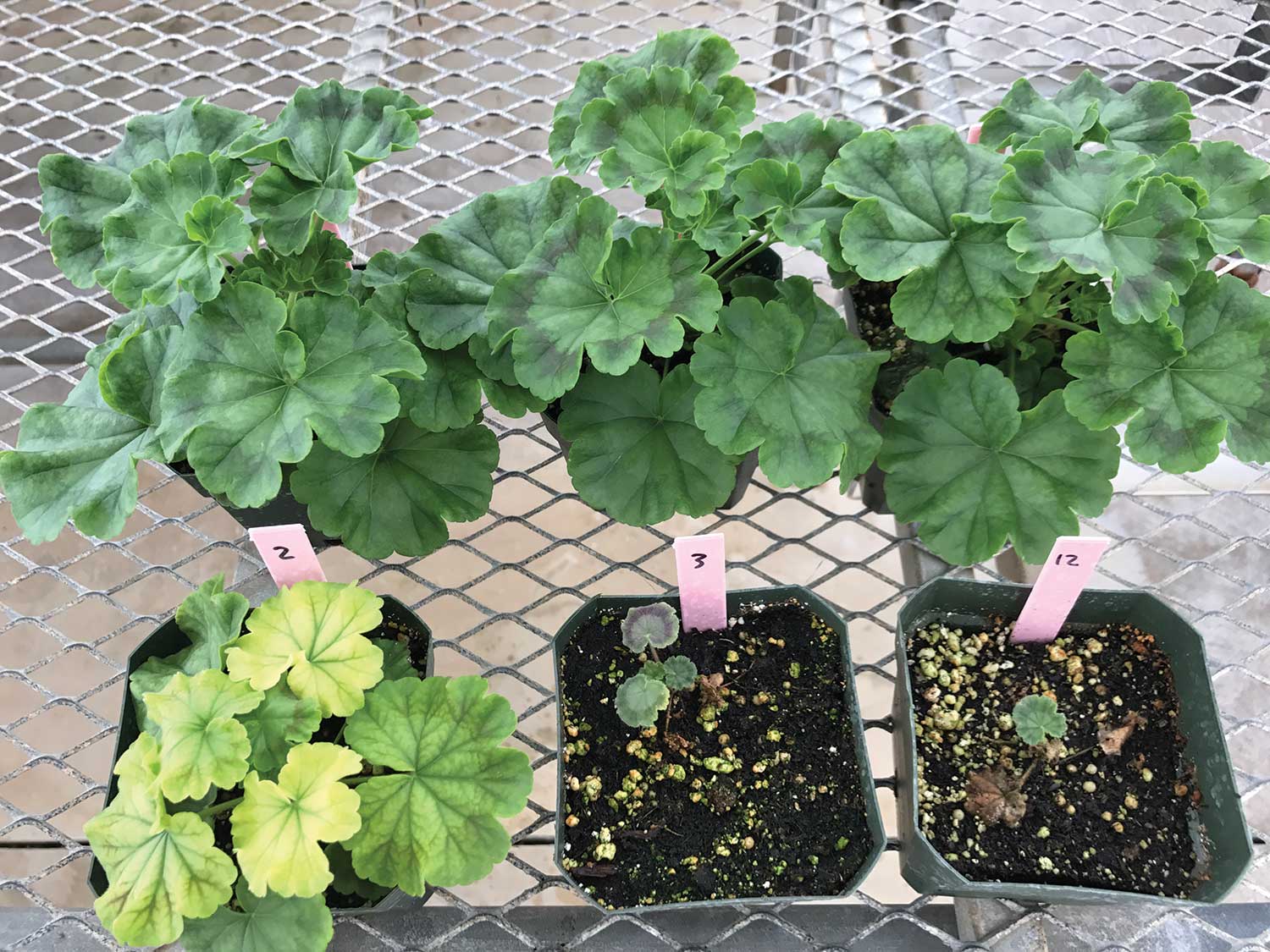
Pythium will invade plant wounds and tender tissue, quickly compromising root systems and stems as seen in these geraniums.
Preventing Pythium spp. begins with proper sanitation, spacing, reducing humidity, elevating pots to avoid standing water and promptly removing infected plants. Mural fungicide from Syngenta delivers systemic, protective activity against pathogens like Pythium, and complements well with other products in an agronomic program, such as Subdue Maxx fungicide, for broader activity against common root and stem pathogens while also providing plant health benefits. Together, Subdue Maxx and Mural deliver robust, multi-spectrum protection.
PHYTOPHTHORA SPP.
Phytophthora is a soil-borne pathogen spread through contaminated water or infected plant material. While some Phytophthora species favor warm conditions, others thrive in cooler temperatures. This versatility makes the pathogen a year-round threat in greenhouse production. Phytophthora spp. can affect a wide range of herbaceous and woody ornamentals, including azalea, boxwood, magnolia, rhododendron and many others. Infections often follow extended periods of soil or foliar wetness. The pathogen also survives in soil or debris as oospores or chlamydospores, producing new infections each spring. Early detection is critical for preventing widespread damage. Symptoms of Phytophthora spp. infection include:
Slow plant growth, stunting and smaller-than- normal foliage
Yellowing leaves that roll, wilt and drop due to poor water absorption
One or more branches wilting, then turning brown and necrotic
Plant collapse when infection reaches the lower stem
Dark brown to black roots with a musty odor
Progressive decline over weeks to months as roots and stems are destroyed.







 Preventing Pythium spp. begins with proper sanitation, spacing, reducing humidity, elevating pots to avoid standing water and promptly removing infected plants.
Mural fungicide from Syngenta delivers systemic, protective activity against pathogens like Pythium, and complements well with other products in an agronomic program, such as Subdue Maxx fungicide, for broader activity against common root and stem pathogens while also providing plant health benefits. Together, Subdue Maxx and Mural deliver robust, multi-spectrum protection.
Preventing Pythium spp. begins with proper sanitation, spacing, reducing humidity, elevating pots to avoid standing water and promptly removing infected plants.
Mural fungicide from Syngenta delivers systemic, protective activity against pathogens like Pythium, and complements well with other products in an agronomic program, such as Subdue Maxx fungicide, for broader activity against common root and stem pathogens while also providing plant health benefits. Together, Subdue Maxx and Mural deliver robust, multi-spectrum protection.