

Industry focus on specialty crop relief intensifies as deadline approaches
Specialty crop growers push for inclusion in federal aid as the Jan. 30 deadline nears. Learn what’s at stake and follow the relief fight.





“This is a very urgent matter,” Kam Quarles, CEO of the NPC and co-chair of the Specialty Crop Farm Bill Alliance (SCFBA), told Great American Media Services on Jan. 12. “It is highly likely that whatever bill resolves that Jan. 30 issue is going to carry this economic relief plan, so if you’re not on that train, you’re in a tough position.

The good news, Quarles said, is that a blueprint for how to help specialty crop growers already exists in the form of the USDA’s Marketing Assistance for Specialty Crops (MASC) program. Last July, a second round of MASC payments totaling $1.3 billion was released to specialty crop growers, bringing total assistance to help offset rising input costs and aid in the expansion of domestic markets to $2.65 million.
“We know what mechanism works to get relief to growers, and it’s that one — the MASC program,” Quarles said. “There’s a lot of rallying around a larger round of MASC, given the economic challenges that everyone is facing. From that perspective, it’s rinse and repeat. We know what works. Don’t reinvent the wheel. We want another round of MASC payments — bigger.”
 The SCFBA is a national coalition of more than 150 organizations representing growers of fruits, vegetables, dried fruit, tree nuts, nursery plants and other products. According to the alliance, specialty crops account for $64.7 billion in farm gate value and 30% of farm cash receipts for crops in the U.S., with potatoes alone totaling $10 billion in farm gate value.
The climate on Capitol Hill is favorable for relief, Quarles said.
“Congress is very receptive to working with us on that,” he said. “We’ve got very strong leaders in both the House and Senate agricultural committees as well as House and Senate appropriations committees. They’re all going to have to collaborate to get that to the finish line.”
According to a Jan. 15 POLITICO report, key members of the U.S. House and Senate are working to put together $15 billion in aid, including relief for specialty crop growers.
Sen. John Hoeven, who chairs the Senate Appropriations Ag-FDA subcommittee, met Jan. 14 with House Agriculture chair G.T. Thompson and Senate Agriculture chair John Boozman to discuss the package, the three men told POLITICO.
House Agriculture ranking member Angie Craig has introduced a farmer aid plan that includes $17 billion in additional funds, with money for specialty crops, foresters and sugar beet farmers included.
SCFBA called for immediate assistance this week, joining dozens of organizations including the American Farm Bureau in a letter to Congress highlighting record-high input costs and historically low market prices. Those factors have caused farmers to face nearly $100 billion in losses nationwide, SCFBA said.
“These trends aren’t just statistics; they represent an economic crisis in rural America,” the groups wrote in the letter, continuing; “We urge Congress to provide immediate economic support to fill in the gap of remaining losses for both field and specialty crop farmers. Additional support will stabilize the farm economy, protect rural communities and ensure a secure food supply. This support must be robust enough to fill in sector-wide gaps.”
Specialty crops — including fruits, vegetables, tree nuts, nursery, greenhouse, and floriculture products — generate more than $75 billion annually in U.S. agricultural cash receipts, account for more than one-third of all U.S. crop sales.
Digesting new guidelines
The 2025-2030 Dietary Guidelines released Jan. 7 by the U.S. Department of Health and Human Services and USDA were warmly received by NPC, which applauded the positioning of a potato front and center in an accompanying food pyramid infographic.The guidelines are released every five years following a scientific review of nutrition evidence by a committee of experts.
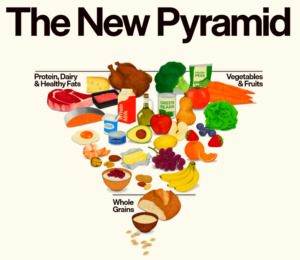
“For example, a french fry. That is something that is produced with effectively three ingredients. You can do it in your kitchen at your house,” Quarles said. “We want to work with the administration to go through how they’re categorizing various commodities, various forms of foods, to make sure that something that is that simple to produce doesn’t inadvertently land in an ultraprocessed category. That doesn’t make any scientific sense. It doesn’t make much common sense, and it’s not going to serve the purpose that the administration intends with this overall Make America Healthy Again initiative.”
 While ultraprocessed foods have been a topic of much recent nutrition conversation, a clear definition has yet to emerge,. The Dietary Guidelines Advisory Committee addressed “highly processed” foods.
“We assume there’s going to be an ultraprocessed definition coming out. (Administration officials) have requested information on that,” Quarles said. “There’s going to be several more steps in the MAHA process, we assume, and we’re going to be engaging at every point.
“The DGA is a very important process, and we want to make it better in the future.”
— Melinda Waldrop, managing editor
Editor’s note: This story has been updated to include details of potential aid being discussed in Congress and of a letter sent to Congress by SCFBA.