

2026 Pest & Disease Survey Report
Pest pressure isn’t going away — it’s evolving. See what growers are dealing with now and how they’re adapting.





Key takeaways
- Pest pressure remains high, with aphids and thrips leading concerns
- About 80% of growers report insect-related challenges
- Biological controls and IPM adoption are increasing
- Powdery mildew and root rots are top disease issues
- Water management plays a key role in disease prevention
- Growers want more data on product efficacy and resistance management
Greenhouse growers are facing many of the same pest and disease challenges as before, but this year shows noticeable shifts in intensity, timing and overall concern. Results from GPN’s annual Pest and Disease Survey highlight mounting pressure from long- standing threats and emerging management challenges, along with ongoing questions about how best to address problems amid rising costs and operational constraints.
Insect pests such as aphids and thrips remain leading concerns, while disease issues including powdery mildew and root rots continue to drive demand for integrated solutions. Survey respondents emphasized increasing reliance on biological controls and integrated pest management as resistance and environmental pressures shape production practices.
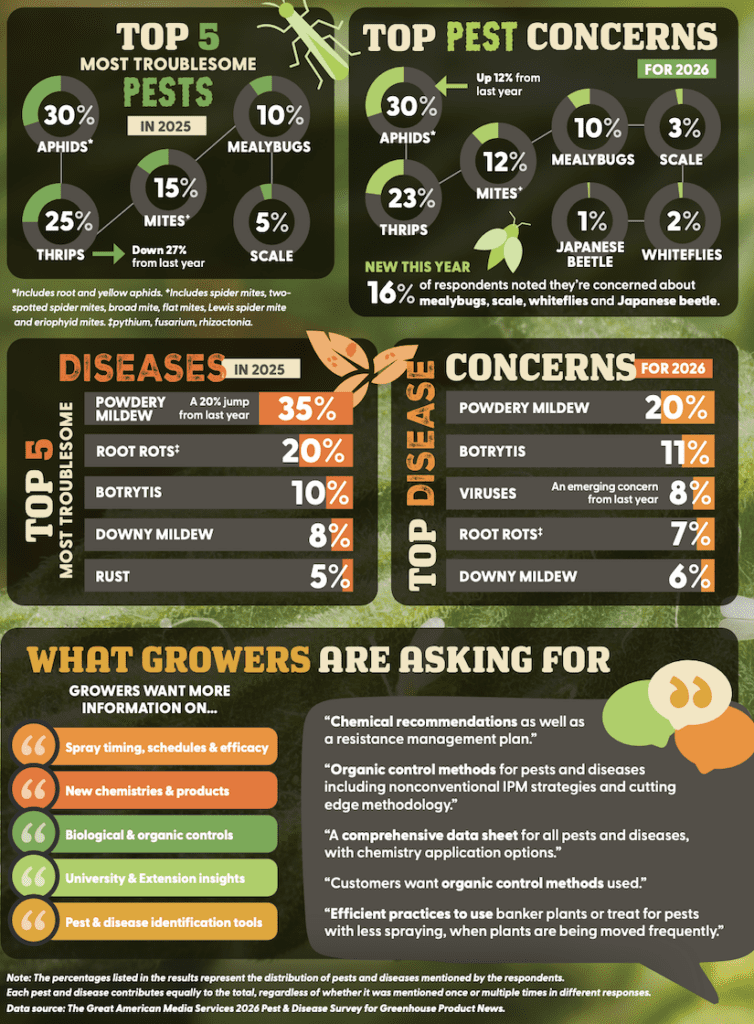
Approximately 80% of respondents identified insect and pest pressure as a primary challenge. Aphids were cited most frequently as a persistent issue across annuals, perennials and greenhouse crops. Growers reported seasonal spikes in spring and fall and noted difficulties managing populations in crops such as calibrachoa and houseplants. Chemical resistance and a growing shift toward biological controls were common themes.
EVOLVING PEST PRESSURE
Thrips ranked as the second most common pest concern. Western flower thrips and thrips parvispinus were frequently mentioned, particularly in ornamentals like dahlias and asclepias. Integrated pest management and chemical rotation strategies were widely adopted to address resistance and ongoing infestations.
Two-spotted spider mites and broad mites were highlighted as significant problems in tropicals, succulents and container crops. Growers emphasized biological controls and integrated pest management as essential tools.
DISEASE IMPACTS IN PRODUCTION
Powdery mildew was the most prominent disease concern, affecting ornamentals, perennials and greenhouse crops. Growers cited recurring outbreaks and challenges managing humidity-related conditions. Cultural controls and fungicide rotations were common strategies.
Root rots and soilborne diseases ranked second. Pythium, fusarium and rhizoctonia were frequently mentioned, particularly in propagation and container production. Water management and media improvements were emphasized to reduce losses.
Growers overwhelmingly sought pest and disease management strategies, including chemical recommendations, resistance management and integrated approaches. Requests for new products and efficacy data reflected demand for independent research and mode-of-action information.
FAQ
What are the biggest pest concerns for greenhouse growers?
Aphids and thrips are the most commonly reported insect pests.
How widespread are pest challenges?
About 80% of surveyed growers reported pest pressure as a major issue.
What diseases are most problematic?
Powdery mildew and root rots are the top concerns.
How are growers managing pests and diseases?
Many are increasing use of biological controls and integrated pest management strategies.
Why is resistance a concern?
Repeated chemical use has led to reduced effectiveness, driving the need for rotation and alternative controls.