

Combating boron toxicity in Easter lily
Boron toxicity can severely damage Easter lily crops. See trial results and review how potassium silicate treatments reduced symptoms.





Potassium silicate shows promise in trials
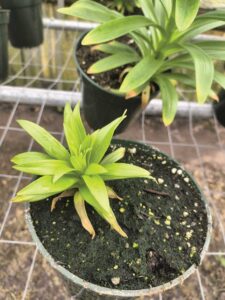
Boron is an essential micronutrient for plant health, playing a role in cell wall structure, membrane integrity and various metabolic processes. But when present in excess, boron quickly becomes toxic, causing reduced shoot and root growth, chlorosis, necrosis and stunted development. In Lilium longiflorum (Easter lily), boron toxicity first appears as yellowing on the tips of lower leaves, which progresses toward the stem and upward through the plant. Left untreated, the tissue becomes necrotic, flower bud count drops and plant loss can occur.
Excess boron can result from over- fertilization, potting mixes with high boron content or irrigation water naturally rich in boron. Boron’s availability is also influenced by soil pH, salinity and other chemical interactions, making toxicity an occasional but potentially costly challenge in greenhouse production.
At Alexander Hay Greenhouses in Apopka, Florida, unusually severe symptoms prompted tissue testing. According to Stevie R. Goesmann, who conducted the trial there, lab results revealed boron levels in lily bulbs of 351 ppm — more than seven times the normal range of 30 ppm to 50 ppm. By contrast, a healthy lily crop from the same facility tested at 28.6 ppm, slightly below the normal range but symptom-free. Soil samples reflected a similar pattern: 1.82 ppm in affected plants (above the 0.5 ppm to 1 ppm normal range) versus just 0.09 ppm in the healthy crop.
EXPLORING A POTENTIAL SOLUTION
Silicon, delivered in forms such as potassium silicate, is widely recognized for improving plant tolerance to abiotic stresses, including salinity, drought and metal toxicity. It strengthens cell walls, supports chlorophyll production and can help plants maintain growth under stress. Some studies suggest silicon can also alleviate boron toxicity in certain field crops, which led Goesmann to test it in Easter lilies.
Goesmann trialed Sil-Matrix (29% potassium silicate) from Certis Biologicals — labeled for multiple application methods and functions as a fungicide, insecticide and miticide, while also promoting overall plant health.

necrosis and chlorosis.
TRIAL DESIGN
Goesmann compared four treatment groups:
• Control 1: No treatment
• Control 2: Biostimulant only (Wicked Green, an algae- derived product used earlier in the season)
• Trial 1: Sil-Matrix drench at 7 oz/100 gallons
• Trial 2: Sil-Matrix foliar spray at 7 oz/100 gallons
Each control group contained 25 plants, while trial groups had 100 plants. Variability in pot size, plant size and degree of damage was present across all groups. Applications began in February 2025 and continued weekly for three weeks, followed by a two-week break to monitor lasting effects before a final application.
RESULTS AND OBSERVATIONS
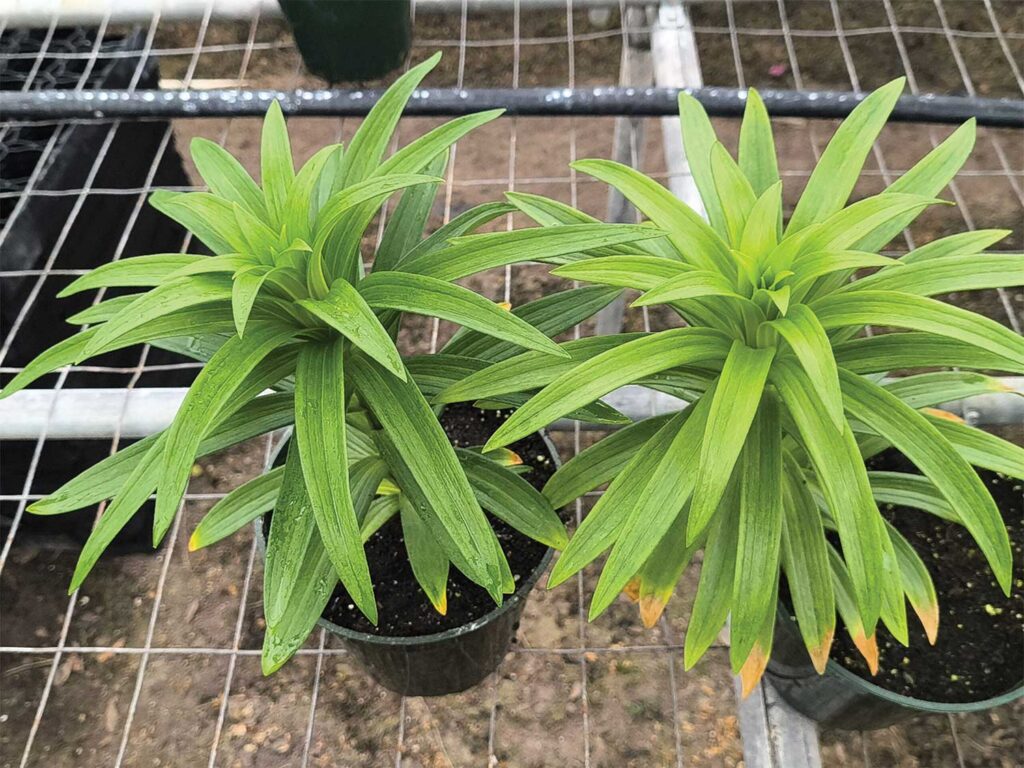
Improvements appeared quickly. Within one week, both drenched and sprayed plants showed reduced yellowing, with the drench treatment producing the most visible gains. Necrosis halted in drenched plants almost immediately and did not resume during the two-week treatment break. Sprayed plants improved as well, but symptoms returned slightly without continued application.
By week 11, drenched plants displayed healthy green foliage and minimal leaf tip damage. Spray-treated plants had less yellowing and necrosis than either control group but still showed more symptoms than drenched plants. Biostimulant-only plants fared better than untreated controls but had more severe damage than either Sil-Matrix group. Untreated plants suffered significant stunting, leaf loss, poor bud development or plant death.
Importantly, Goesmann noted no phytotoxicity in any treatment.
PRACTICAL TAKEAWAYS FOR GROWERS
This trial suggests that potassium silicate — particularly when applied as a drench — can effectively slow or stop the progression of boron toxicity symptoms in Easter lily. While necrotic tissue cannot be reversed, chlorosis was visibly reduced and plants maintained improved condition even after a temporary halt in treatment.
These results were based on visual assessments rather than quantitative measurements, so further controlled studies are warranted to refine application rates, timing and long-term benefits. Similar trials on other ornamentals could help determine whether these findings translate across crops.
For operations facing occasional boron toxicity, potassium silicate may be a valuable addition to the management toolkit. As with any corrective measure, early diagnosis, accurate tissue and soil testing and understanding the source of the excess are key steps before applying treatment.
LOOKING AHEAD
Since this trial began, Certis Biologicals has also recommended AgSil25 (21% silica, 8% potassium) as another potassium silicate source. Though not tested in this trial, it could be an alternative option for growers seeking similar results.
For complete methodology, lab data and an in-depth discussion of the physiological processes involved, see the full paper: The Efficacy of Potassium Silicate in Alleviating Boron Toxicity in Lilium longiflorum.
Photos courtesy of Stevie Goesmann.