

Culture Report: The gold standard of hardy fountain grass
Pennisetum alopecuroides offers hardy performance with attractive foliage and foxtail plumes. See top varieties and apply production and care guidelines.





Pennisetum alopecuroides is built to perform for production and landscape
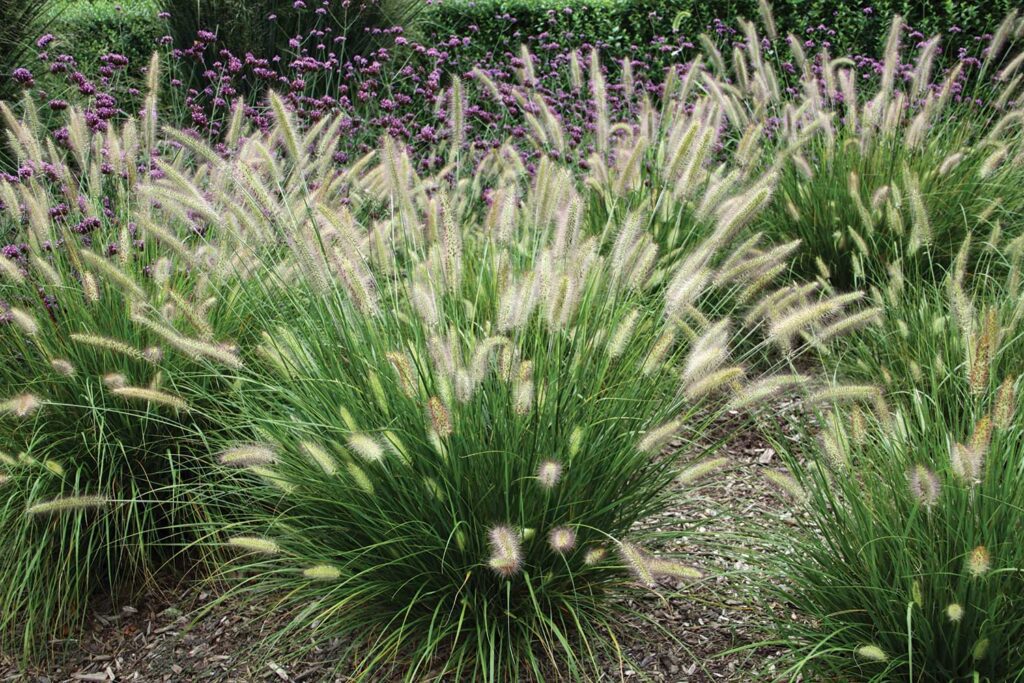
Pennisetum — or fountain grass — comes in many forms, from annual to perennial, but when you’re looking for a hardy fountain grass, reach for Pennisetum alopecuroides. While some ornamental grasses wow with foliage and others with flowers, P. alopecuroides gives you both: beautiful foliage and charming foxtail plumes in a variety of colors. In addition, many selections reach a medium height, offering more versatility in gardens, landscapes and commercial applications.
This appeal has not escaped many breeders’ attention, and today there are numerous varieties and selections to choose from. Here’s a quick spotlight on three of the most popular Pennisetum alopecuroides choices:
‘Hameln’ continues to reign as the best-selling pennisetum. It’s the Goldilocks of hardy fountain grass — not too tall or too short. Seed heads appear in July and open greenish- white, turning a creamy tan with maturity. It’s great for mass plantings, well-behaved and reaches a mature height of 24 inches.
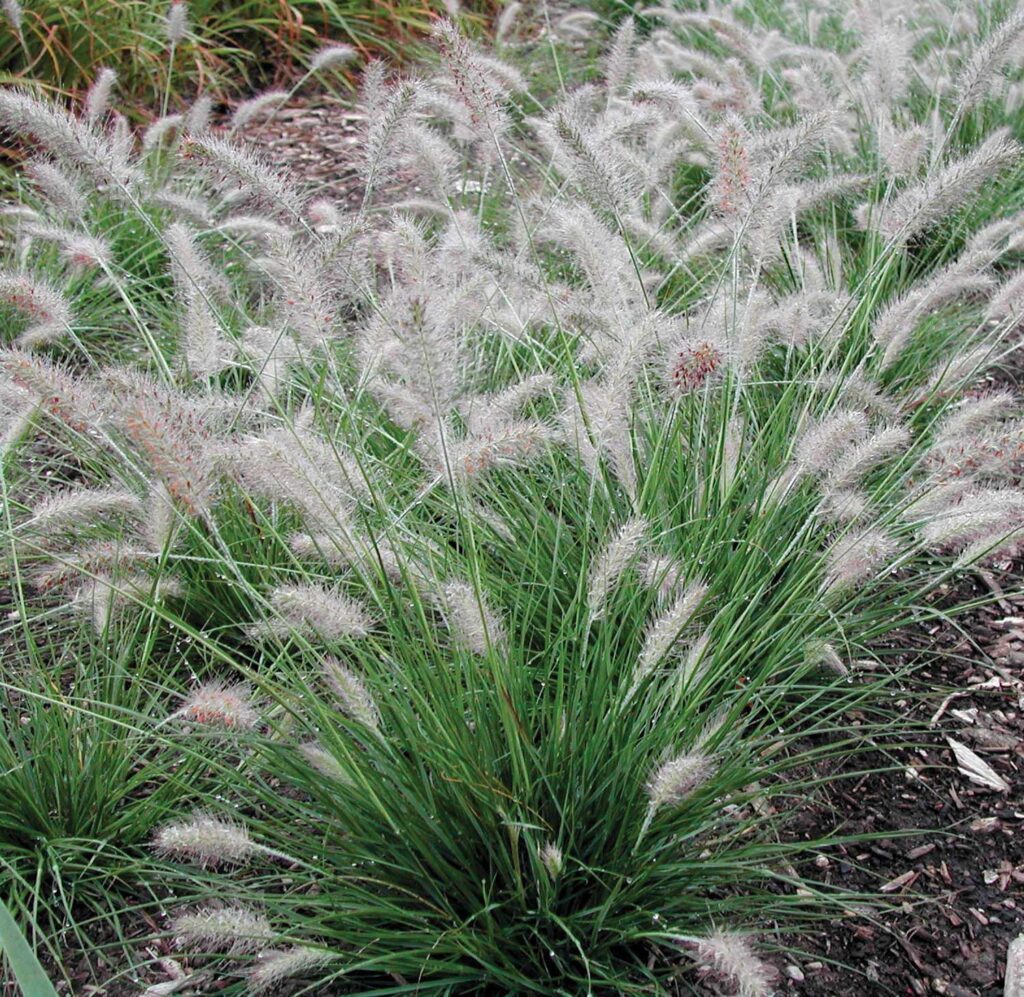
‘Hush Puppy’ (‘Tift PA5’) is one of the infertile varieties, featuring long-lasting pink plumes that spray high over rounded mounds of slender foliage. This long-flowering selection won’t reseed and grows to 30 inches at maturity.
GROWTH INITIATION
Plant one 38-cell liner or two 72-cell liners per pot. Pot size can range from 1 to 3 gallons.
Media pH should be 5.5 to 6.5 with an EC of 0.60 to 1.2 mS/cm.
Liner transplants require consistent moisture from start to finish. Dry down should be minimum due to drought stress causing necrosis of leaves. Overwatering during periods of drought stress will lead to root rot and loss.
Depending on your program, incorporate a 10-3-12 fertilizer (6- to 9-month release) or something comparable into the soil before transplant. As a top dress, apply accordingly to the edge of the inside pot area, refraining from application around the crown of the plant. As a liquid feed, apply 50 ppm every week for four weeks, then 100 ppm weekly thereafter until finish. A constant liquid feed at every watering can be applied at 100 ppm. If yellowing occurs, additional iron can be added.
PRODUCTION
Supplemental lighting
The use of HID or LED supplemental lighting in greenhouses during November through April is recommended to extend daylight hours. Three additional hours in the morning before sunrise and three hours after sunset will be sufficient.
Temperature
Although cold hardy, pennisetum grow best in a heated greenhouse when night temperatures drop below 55° F. Heater thermostats should range from 60° F to 70° F for nights. If growing outdoors, start in a heated greenhouse or during warm temperatures. Once finished, they can be moved outside to overwinter. They are cold hardy to 35° F in pots and 0° F in the landscape.
Pests and diseases
If moisture levels remain high in dense canopy, spittlebugs can become an issue. Snails can also become a problem in high-moisture conditions. Whiteflies are common during the summer months.
Pennisetum can develop fungal leaf spot during high heat and humidity. Watch for root rot and crown rot during summer.
If overwintering, these issues can become a problem if moisture levels at the crown and root zone stay saturated during dormancy. Follow a three-week broad-spectrum pesticide spray program in spring and summer. If overwintering outdoors, apply a monthly fungicide drench during dormancy.
CROP MAINTENANCE
Regular trimming during spring and summer can encourage a denser canopy. Thatch can be a problem during trimming, causing crown rot. Remove as much debris from the crown as possible after trimming. If crown rot occurs, trim to 2 inches above the soil line and apply a fungicide drench to encourage new growth.
FINISHING GUIDELINES
After transplanting a 38-cell liner or two 72-cell liners, finishing time in a 1-gallon pot is approximately eight to 10 weeks, while a 3-gallon container will be finished in 10 to 12 weeks.
These pennisetum varieties require long days, high temperatures and full sun for finishing requirements. Night temperatures above 65° F are recommended. Cooler temperatures will delay finishing times.
A three-week pesticide preventative rotation is recommended if environmental conditions are favorable for disease and insect populations.
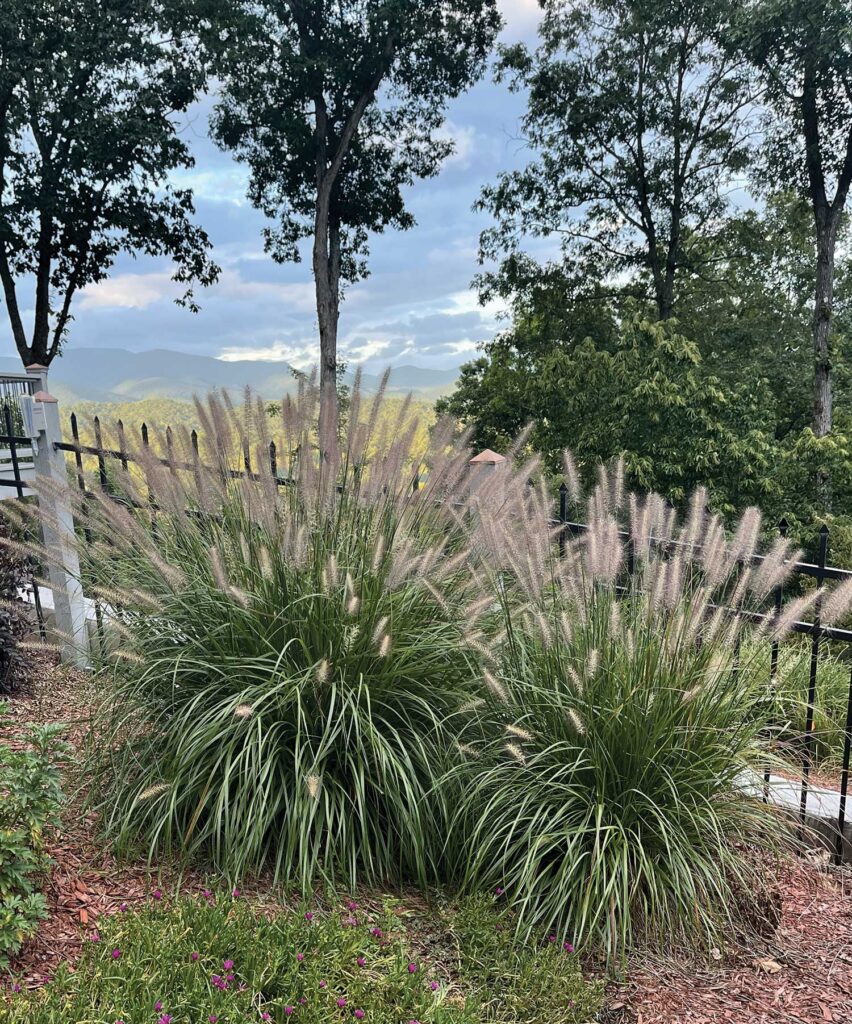
Photo courtesy of Emerald Coast Growers.
Cary Levins is Level 1 grower at Emerald Coast Growers’ facility in Milton, Florida. Learn more about its pennisetum and other grasses at ecgrowers.com.