

Greenhouse tech becomes essential infrastructure
Greenhouse operations are entering a new era where technology is no longer optional. From climate automation to energy efficiency and robotics, growers are investing in smarter systems to stay competitive and resilient.





Unified platforms connect climate, labor and energy management
Key Takeaways
Greenhouse technology is shifting from optional to essential
Remote monitoring and data-driven systems are accelerating adoption
Energy efficiency and alternative energy are top priorities
Automation is driven largely by labor challenges
Targeted climate control improves efficiency and crop outcomes
Integration across systems is shaping the future of greenhouse operations
As greenhouse growers deal with increasing energy costs, tighter labor markets and higher pressure to produce more with fewer resources, technology is no longer a competitive advantage — it’s a necessity. From advanced heating systems and insulation materials to fully integrated climate controls and data-driven automation platforms, today’s greenhouses are becoming smarter, more efficient and more responsive than ever before.
At major industry events such as Indoor Ag-Con and Cultivate’26, innovation is taking center stage, with suppliers and growers alike highlighting solutions that promise greater precision, sustainability and scalability. The question is no longer whether to adopt new technology, but which investments will deliver the greatest return while positioning operations for long-term resilience in a rapidly evolving market.
SMARTER CLIMATE CONTROL THROUGH DATA AND REMOTE ACCESS
The modern greenhouse is evolving into a tightly managed, data-driven environment designed to maximize output without expanding footprint.
“Cloud-based remote monitoring and control systems are being adopted quickly,” said Chris Hume, customer experience manager at Advancing Alternatives.
He points to platforms like AdvanSync, which allows growers to oversee ventilation, heating and humidity from anywhere. With labor and energy costs rising, remote access reduces the need for constant on-site checks while preventing crop loss from temperature or humidity extremes.
“Growers are facing increased labor and energy costs, so these tools allow remote oversight, optimizing energy use for better efficiency,” he said.
Expectations around usability have shifted as well.
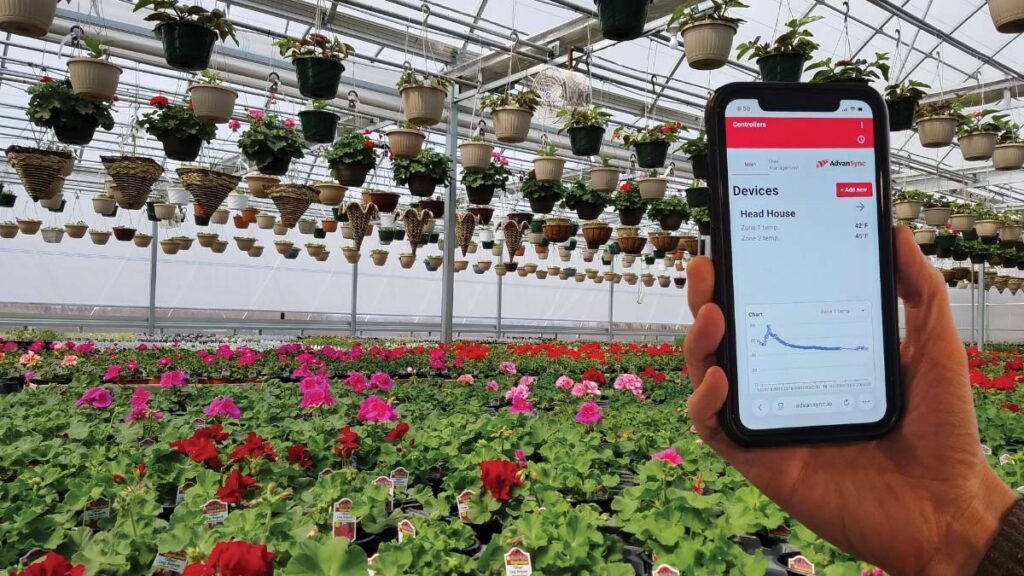
“They expect technology to be intuitive and mobile- friendly, with seamless integration into existing setups,” Hume said. “Whether it’s touchscreen controllers or motorized systems, operators want tools that fit into already busy schedules without steep learning curves.”
Data, once considered optional, is now essential.
“A few years ago it was mostly manual checks,” Hume said. “Now, real-time climate data and automation feedback enable proactive decisions — catching issues early, fine-tuning energy use and freeing time for higher- value tasks like crop planning.”
That shift toward proactive management is setting the stage for deeper integration of predictive analytics and artificial intelligence. Over the next few years, Hume expects “set-it-and-forget-it reliability with proactive alerts” to dominate, giving growers peace of mind amid labor shortages and increasingly volatile weather patterns.
ENERGY EFFICIENCY AND THE PUSH TOWARD DECARBONIZATION
Energy management is another area where technology is accelerating change. Jim Rearden, CEO of BioTherm Solutions, noted the biggest drivers in greenhouse climate technology today are energy efficiency, alternative energy sources and tighter mechanical climate control.
“The buzz nowadays is not just energy efficiency, which I would say is number one, but alternative sources of energy, probably number two,” he said.
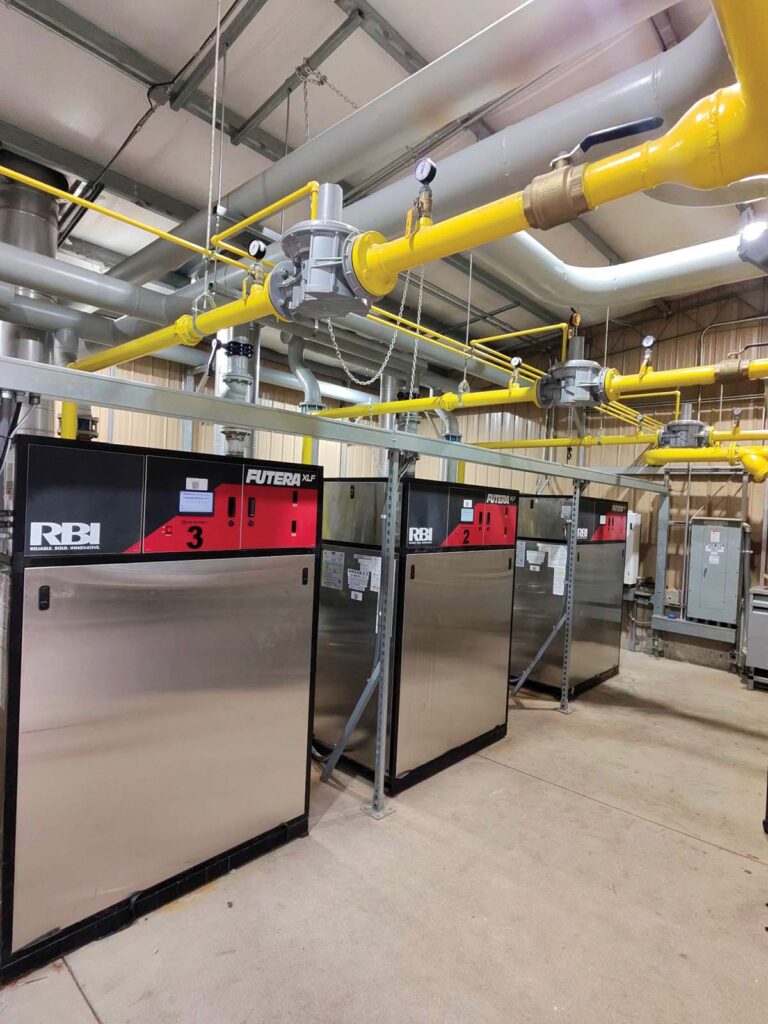
As more high-value crops are grown in controlled environments, mechanical cooling, dehumidification and CO₂ enrichment are becoming more common. These systems allow growers to tightly manage microclimates, though they increase operating expenses. To help offset those costs, BioTherm focuses on high-efficiency heating equipment such as low-mass condensing boilers, which only fire when needed rather than idling continuously.
“Traditional high-mass boilers are always on for the season, and they’re not very reactive,” Rearden said. “In contrast, modern condensing systems can reach efficiencies as high as 99%, extracting far more usable energy from each unit of fuel.”
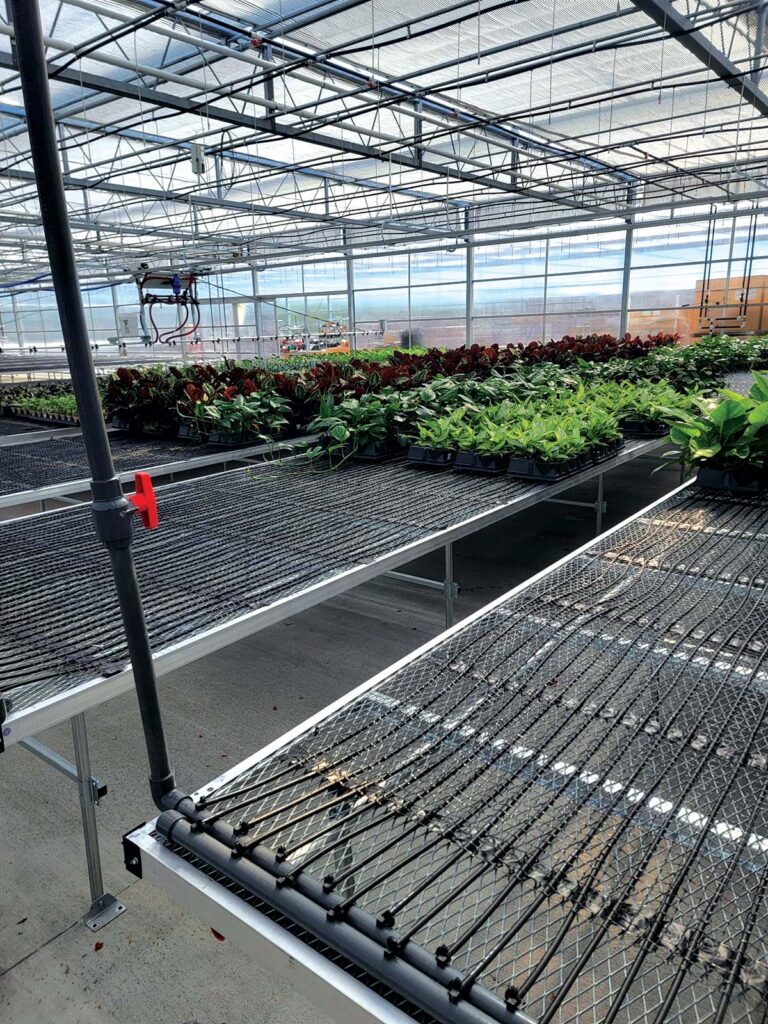
Heating integration has also evolved alongside advanced climate controllers. With more sensors deployed throughout greenhouses — from floor level to overhead crops — operators are moving away from the “shotgun approach” of heating the entire structure uniformly. Instead, targeted systems deliver energy precisely where crops need it.
BioTherm’s Roll ‘n’ Grow product, for example, applies heat directly at bench or floor level, improving microclimate consistency and reducing wasted energy.
Sustainability goals are also pushing growers to think long term. In some regions, decarbonization and electrification mandates are encouraging operators to prepare for non-fossil fuel heating alternatives.
“A lot of enlightened growers are thinking five or 10 years from now,” Rearden said, noting that systems are being designed today that can accommodate lower supply water temperatures and future energy pivots. “While fully non-fossil heating solutions can be cost-prohibitive or constrained by power availability, incremental efficiency gains and infrastructure planning offer a practical migration path.”
AUTOMATION DESIGNED FOR LABOR REALITIES
Labor, however, may be the most significant catalyst for automation investment. Kris Nightengale, president of TTA-ISO Americas, noted many growers are focused on maximizing output from existing facilities rather than building new structures.
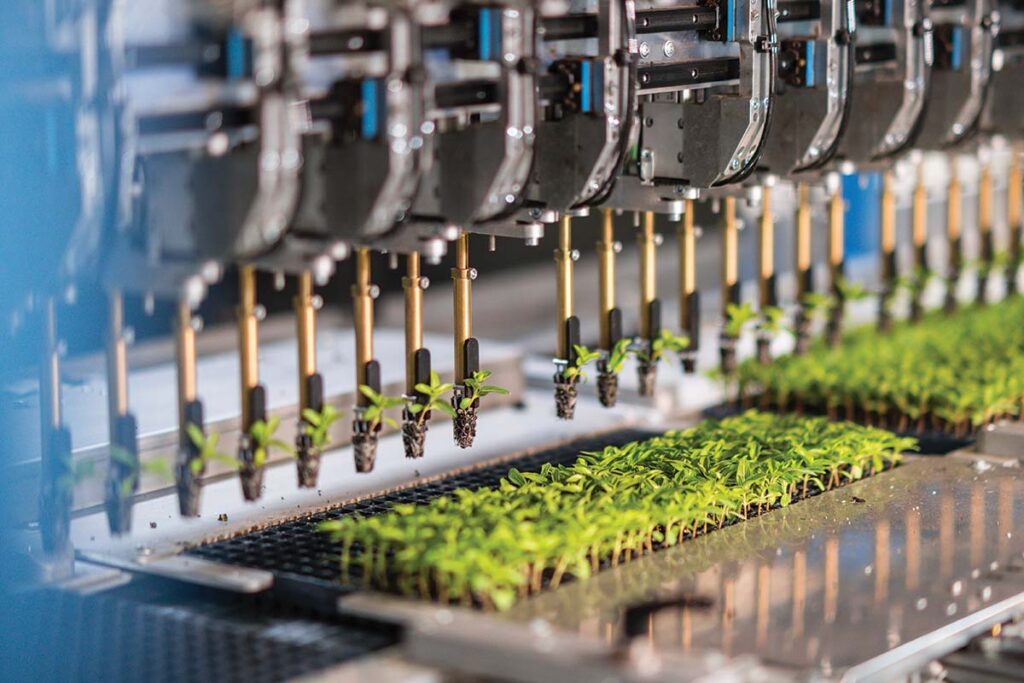
“Most people are trying to get higher performance from the facility they have without doing any substantial construction,” he said. While energy savings are welcome, Nightengale noted labor costs and turnover are top of mind. Retaining new employees and navigating uncertainties in seasonal labor programs add expense and risk. As a result, transplanting and cutting robots are becoming more adaptable and intelligent.
“We’re looking for adaptability that’s faster, allows a grower to run a lot more variation through a machine, and makes the machine changes minimal,” he said. Modern equipment is also being designed to compensate for less experienced operators.
“We’re relying more on the machine to make up its own mind or to guide the operator through the decisions,” Nightengale said. “The next phase will involve systems that not only report performance metrics but also self-correct in real time.”
While 80% of machine frameworks and core software may be standardized, the remaining 20% is often tailored to address each grower’s unique challenges. Equally important is comprehensive employee training.
“You can do almost everything perfectly, but if you don’t execute employee training well, it’s very, very difficult to have rapid success,” Nightengale said. “Organizational buy-in is essential for technology to deliver its promised returns.”
MAKING A DIFFERENCE
Beyond these companies, other greenhouse technology providers are expanding capabilities in complementary ways. Argus Controls continues advancing integrated environmental control systems that centralize irrigation, fertigation, lighting and climate management under unified software dashboards, giving growers greater visibility and coordination across operations.
Apogee Instruments has introduced new generations of PAR sensors and spectroradiometers designed to deliver more precise light measurements, supporting data-driven decisions as supplemental LED lighting strategies grow more sophisticated.
Meanwhile, AdeptAg’s Automation Solutions group is expanding robotics, material handling and software integration offerings to streamline plant movement and production workflows, reinforcing the industry’s shift toward end-to-end automation.
Taken together, these developments point to a greenhouse sector that is becoming more interconnected, predictive and resilient.
FAQ
Why is greenhouse technology becoming essential?
Rising labor, energy costs and production demands require more efficient and automated systems.
What technologies are most important right now?
Climate control systems, automation platforms and energy-efficient heating solutions.
How does automation help growers?
It reduces labor needs, improves consistency and increases production efficiency.
What role does data play in greenhouse management?
Real-time data enables proactive decisions and better environmental control.
Are growers moving toward sustainability?
Yes, many are adopting energy-efficient systems and planning for alternative energy sources.
A graduate of the University of Miami, Keith Loria is an award-winning journalist who has been writing for almost 20 years. View his recent writing at keithloria.contently.com.