

Dr. Bugs: Are insect growth regulators effective against mealybugs?
Insect growth regulators target immature mealybug stages and can help suppress populations in greenhouses. Compare research findings and understand application timing.





Key takeaways
- Insect growth regulators primarily affect immature insect life stages.
- Mealybug crawlers are more susceptible because they lack protective wax.
- Research has shown mixed results depending on application methods and life stages treated.
- Early and repeated applications improve greenhouse mealybug management.
- Overlapping mealybug generations make control more difficult.
Answer: Before addressing whether insect growth regulators (IGRs) can manage mealybugs, it is important to understand how these compounds work.
IGRs mimic insect hormones, disrupting molting or modifying insect development. They interfere with normal growth so insect pests die before reaching adulthood. IGRs also reduce pest populations over time by inhibiting metamorphosis and affecting female reproduction.
These materials are primarily active on immature life stages, including the nymphs or larvae of fungus gnats, mealybugs, scales, thrips and whiteflies.
IGRs are grouped into three categories based on mode of action: 1) chitin synthesis inhibitors, 2) ecdysone antagonists and 3) juvenile hormone mimics. Chitin synthesis inhibitors interfere with enzymes responsible for producing chitin, an important component of the insect exoskeleton. As a result, insect pests die during the larval or nymphal stages or develop into sterilized females lacking chitin.
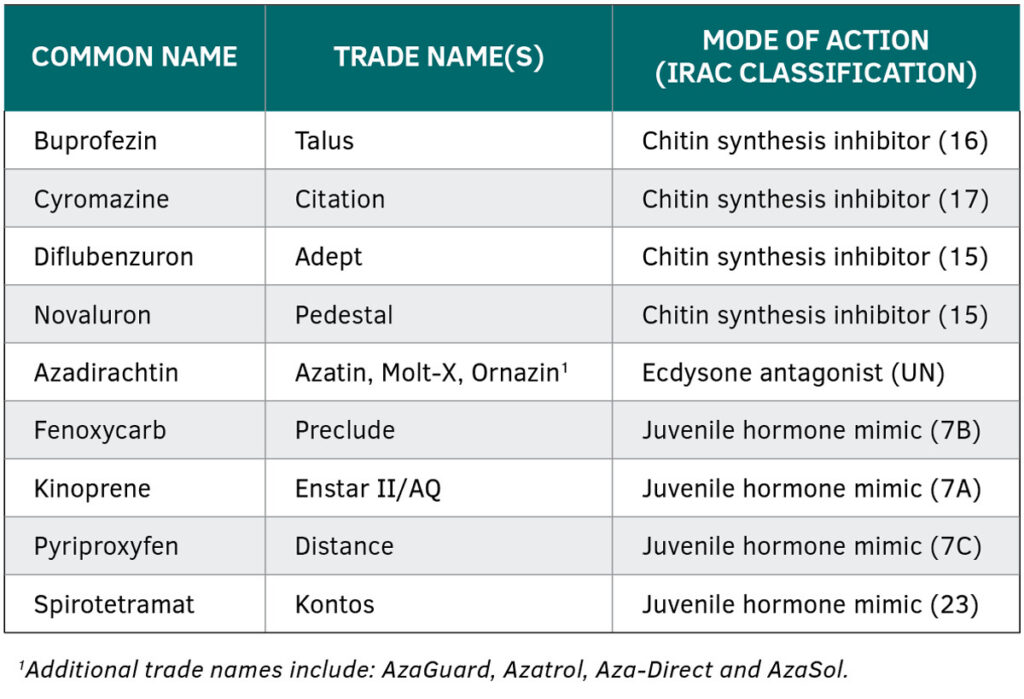
Ecdysone antagonists disrupt molting by inhibiting metabolism of the molting hormone ecdysone. Juvenile hormone mimics prevent development, causing insect pests to remain in the larval or nymphal stage and preventing completion of the life cycle. IGRs registered for use in greenhouse production systems are listed in Table 1.
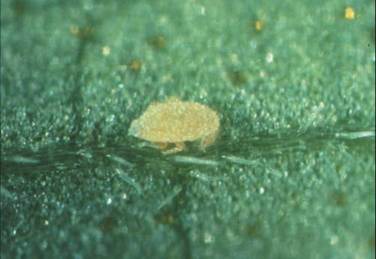
IGRs directly affect mealybug nymphs, also known as crawlers, and may indirectly reduce female egg production. Mealybug nymphs are susceptible because they lack the waxy covering (Figure 1) that protects later life stages from insecticide exposure. However, once nymphs develop the waxy covering, IGRs become less effective at maintaining citrus mealybug populations below plant-damaging levels.
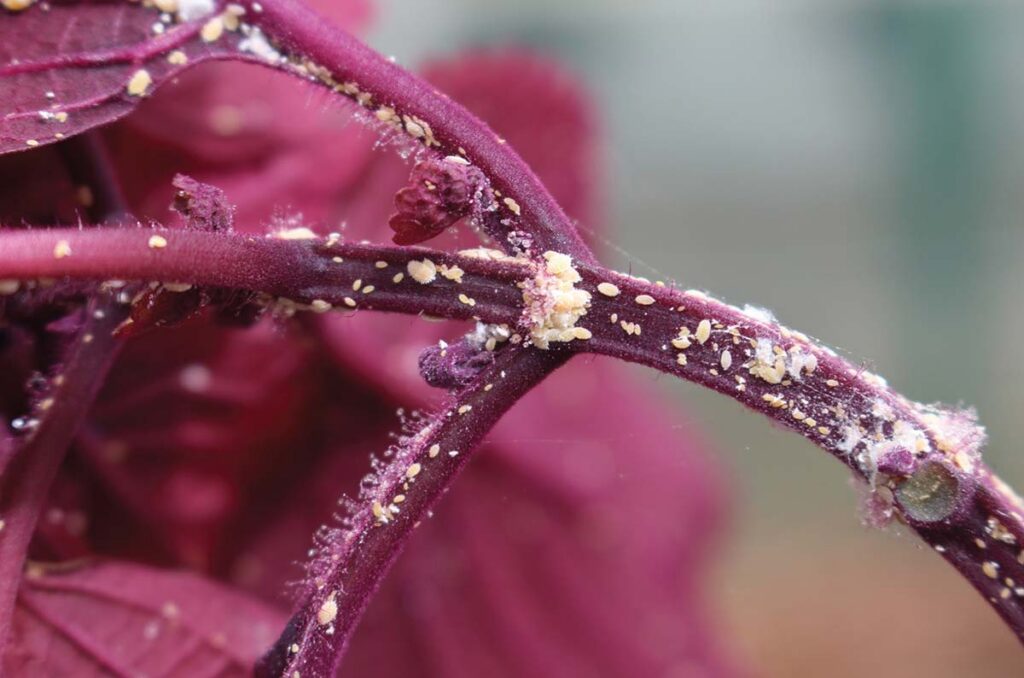
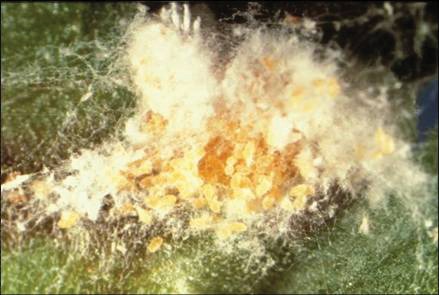
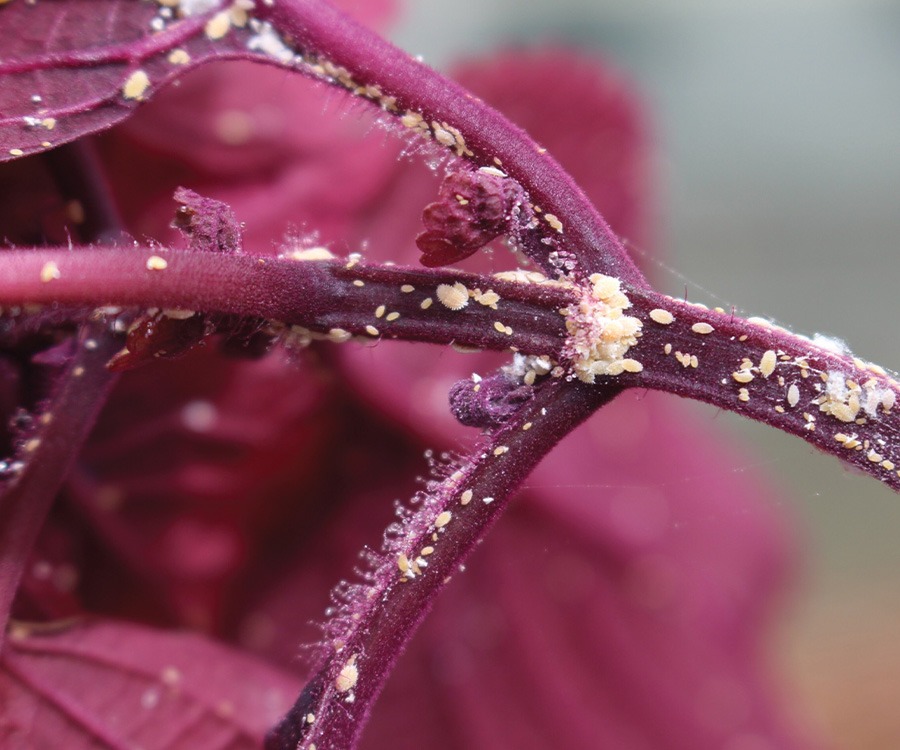
In addition, overlapping generations are common, with eggs, nymphs, pupae and adults present simultaneously (Figure 2). Eggs are generally not affected because they are protected by a waxy egg sac, or ovisac (Figure 3).
IGRs have been tested against mealybugs, including the citrus mealybug, Planococcus citri, with mixed results. Buprofezin (Talus), depending on the application rate and level of exposure, may inhibit nymph emergence from eggs and affect subsequent development and survival. Egg production also may decline when female citrus mealybugs are exposed to buprofezin.
Research showed buprofezin was more active on mealybug eggs and young nymphs than on adult females. However, another study indicated that buprofezin and spirotetramat were more active on young nymphs than eggs.
A laboratory study showed that exposure to kinoprene (Enstar II/AQ) reduced female reproduction and lowered citrus mealybug populations. However, another study demonstrated that azadirachtin (Orazin), kinoprene, pyriproxyfen (Distance), novaluron (Pedestal) and buprofezin had minimal effect on female citrus mealybug egg production.
Differences among study results are likely associated with how mealybugs were exposed to IGRs. For example, some studies immersed mealybugs in insect growth regulator solutions or treated leaf disks, whereas others exposed mealybugs on plants to spray applications. In addition, the application rate and the life stages exposed, including eggs, nymphs or adults, may have contributed to conflicting results.
IGRs can be used to manage mealybugs in greenhouse production systems. However, applications must begin early in crop production, and repeat applications will likely be necessary to reduce populations over time and maintain mealybugs below plant-damaging levels.
For more information, refer to the following Extension publications:
Cloyd, R. A. 2013. Insect growth regulators for use in greenhouses. MF-3094. https://bookstore.ksre.ksu.edu/pubs/MF3094.pdf
Cloyd, R. A. 2011. Mealybug management in greenhouses and interiorscapes. MF3001. https://bookstore.ksre.ksu.edu/pubs/MF3001.pdf
Photos courtesy of Raymond Cloyd.
FAQ
What are insect growth regulators?
They are compounds that mimic insect hormones or disrupt molting and development.
Which mealybug stage is most susceptible to IGRs?
Young nymphs (crawlers) are generally the most susceptible.
Why are adult mealybugs harder to control?
Adults develop a waxy covering that reduces insecticide effectiveness.
Do IGRs affect mealybug eggs?
Generally, eggs are protected by the waxy egg sac, although some studies reported effects depending on exposure.
When should IGRs be applied?
Applications should begin early in crop production and are often repeated.
Raymond A. Cloyd is professor and Extension specialist in horticultural entomology/plant protection at Kansas State University. He can be reached at rcloyd@ksu.edu.