

Controlled environment systems could expand US strawberry production in off-season months
Study finds controlled environment systems could boost off-season strawberry production and improve yields in the south central U.S.





Key takeaways
- CEA systems can extend strawberry growing seasons and improve yield
- Off-season production could capture higher winter prices
- High costs, labor and energy needs limit adoption
Controlled environment agriculture (CEA) could expand off-season strawberry production in the south central United States, offering higher yields and improved market timing, according to a recent research overview conducted by researchers led by Nathan Howell at West Texas A&M University.
U.S. strawberry consumption reached about 1.24 billion kg in 2024, or 3.6 kg per person, with supply largely dependent on seasonal production from California, Florida and Mexico. Domestic production has nearly doubled from 744,000 metric tons in 1998 to 1,467,000 metric tons in 2024, growing at an average rate of 2.9% annually.
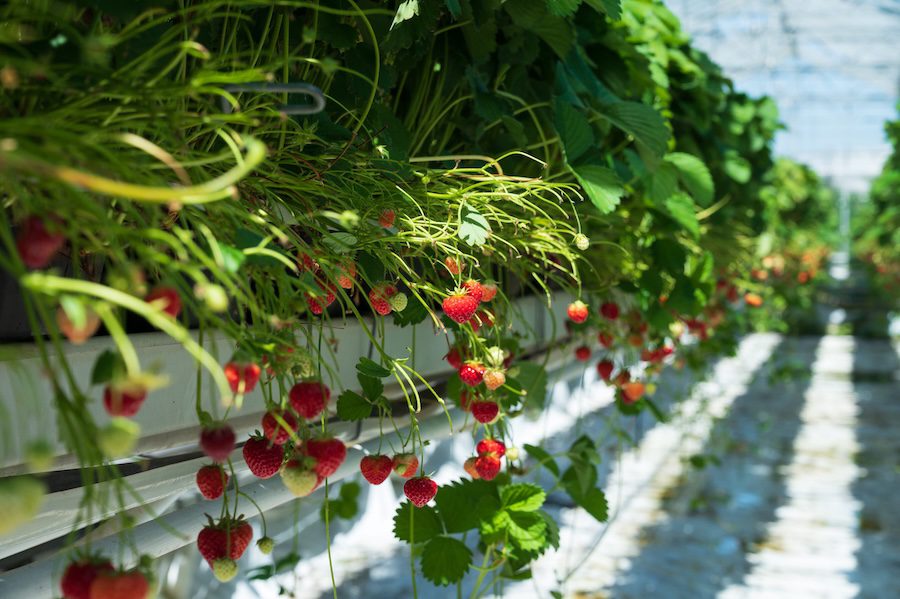
CEA systems, including high tunnels, low tunnels and greenhouses, can extend growing seasons, reduce frost damage and improve fruit quality. High tunnels, in particular, can advance harvest timing and increase early yields, while low tunnels provide basic protection at lower cost.
Price data show a seasonal pattern, with lower prices in June and July and higher prices in December and January when supply declines. Producing strawberries from October to February in the south central region could offer stronger revenue potential during these higher-price periods.
However, expansion faces barriers. Low-technology tunnel systems can be labor-intensive, while greenhouse and indoor systems require high upfront investment and energy use. The U.S. also has limited experience with greenhouse strawberry production compared to regions where protected systems dominate.
Researchers said future work should focus on improving energy efficiency, automation and production practices. Advances in sensor systems, computer vision and digital modeling could support scaling controlled environment systems while reducing costs and improving yield consistency.
Controlled environment agriculture offers a way to grow strawberries outside traditional seasons in the south central U.S. While it can improve yield and market timing, adoption is limited by costs, labor and energy requirements.
Read the full research overview on controlled environment strawberry growing potential.
FAQ
Q: What is controlled environment agriculture for strawberries?
A: It includes systems like tunnels and greenhouses that manage temperature and growing conditions.
Q: Why is off-season production important?
A: Prices are higher in winter months when supply is limited.
Q: What are the main challenges?
A: High startup costs, labor needs and energy use.
Q: Where are most U.S. strawberries grown?
A: Primarily in California and Florida.
Q: What technologies could support expansion?
A: Automation, sensors, computer vision and digital modeling tools.
What this means
CEA could help regional growers compete in higher-value winter markets, but economic and technical barriers remain.