

Strengthening root zone dynamics with engineered wood fiber
Engineered wood fiber improves airspace, moisture control and crop uniformity in greenhouse media. Learn how refined fibers support healthier root zones and explore proven growing strategies.





Key takeaways
- Engineered wood fiber improves root zone airspace and rooting performance.
- Wood fiber can enhance moisture retention and reduce watering needs.
- Drier growing media surfaces may reduce algae, fungus gnats and disease pressure.
- Domestically produced wood fiber offers more predictable supply chains.
- Engineered wood fiber is quality-controlled for consistency and performance.
- Compressed wood fiber products can lower shipping and storage costs.
In greenhouse and controlled environment production, soil health starts with the physical and chemical performance of the growing media. Regardless of terminology, substrate performance remains the foundation for uniform rooting, predictable irrigation and high-quality finished crops.
Wood fiber can improve nutrient retention, accelerate finishing times and increase plant resilience, helping growers reduce shrink and crop loss.
Wood components have been used in growing media for decades, but performance varies significantly based on tree species and processing method. Softwood (coniferous) species remain the primary source for horticultural applications.
Sawdust or wood shavings were the original wood product used in media. Sawdust, a byproduct of sawmills, is typically very fine and fresh in nature. Wood chips, another byproduct, can also be made into various size grades by passing them through a hammermill. Both products are usually locally sourced and limited to short-distance transport due to lack of compressibility.
More recently, U.S. and European companies have begun to create fibrous wood products. Extruded wood fiber is shaped by force, typically using twin-extruders. Disc-refined wood fiber is made by passing wood between a rotating and stationary disc to create fibers of varying thickness.
Engineered wood is defined as the entire complex process that wood of a specific species and grade undergoes before becoming part of your growing media. For example, at Profile Products, wood is digested using heat and pressure, disc-refined to ensure each fiber remains within a specified size for a given product, then dried and compressed up to 14 times before it is ready to ship.
Let’s zero in on what the properties of wood fiber are that help cultivate better plants from the ground up.
AIRSPACE
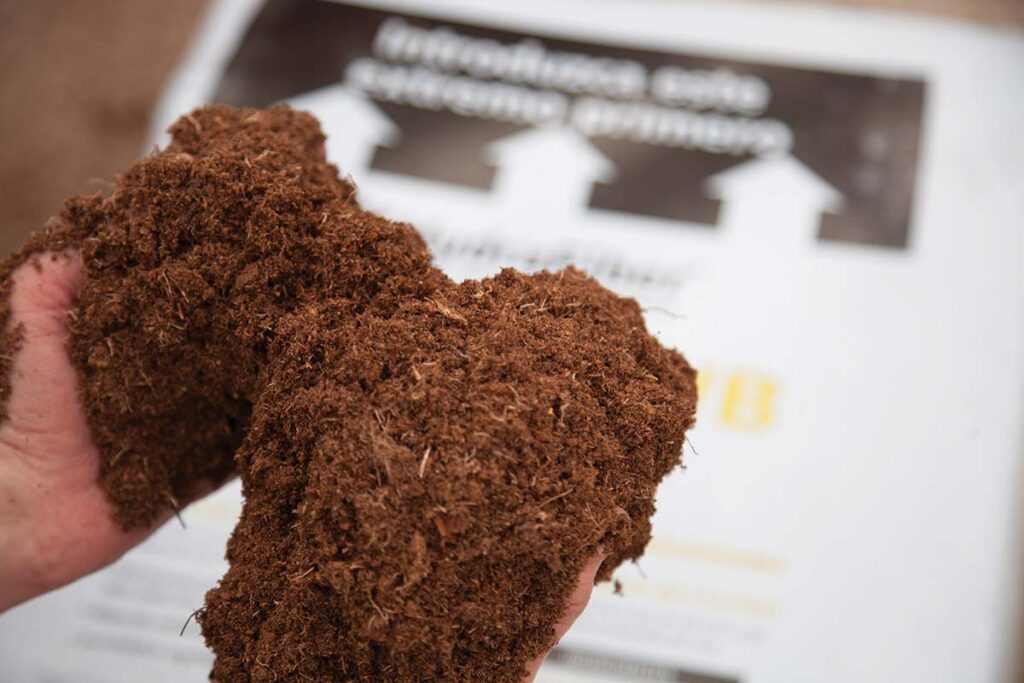
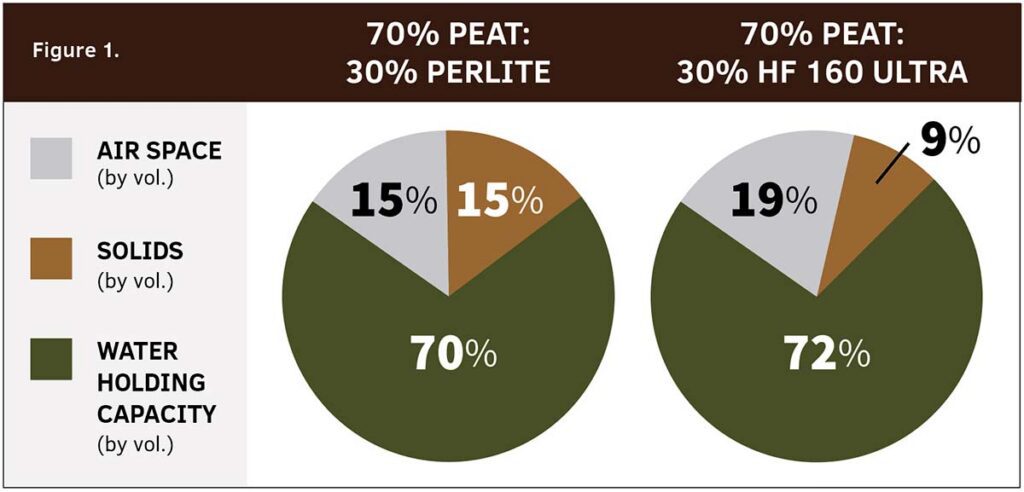
More airspace means better rooting. Engineered wood fiber can be up to 98% porous, creating better air space compared to other common growing media. This enhances root zone development. Airspace also enhances nutrient uptake via transpiration and assists in respiration and temperature regulation.
DRIER SURFACE
Just like Goldilocks, the ideal surface moisture level is just right — not too dry and not too wet. A drier surface stifles algae development, thwarts fungus gnats and potentially reduces other pests and diseases that come from improper drainage or overwatering.
IMPROVED MOISTURE CONTROL
Having the right moisture level may also reduce the amount of watering needed. For example, even incorporating 10% to 20% of engineered wood fiber into a peat blend increases the available water for plant uptake by 10% to 37% in every plant, thanks to the higher surface area of fibers. Plants can access this water easily. Engineered wood fiber also rewets easily.
RELIABLE MATERIAL
Supply chain disruptions affecting Canadian sphagnum peat moss and coconut coir — including shipping delays, tariffs and price volatility — have prompted growers to seek more stable alternatives. Domestically produced wood fiber can offer more predictable supply and lead times for U.S. growers.
It should also be mentioned that wood fiber products, such as HydraFiber, may be highly compressed and have a low bulk density. Compared to other grower media such as coconut coir and peat moss, this means fewer shipments are needed. With this comes lower shipping costs, less product handling by workers and improved storage space utilization.
COMPARING ENGINEERED WOOD FIBER
Not all wood fiber products are created equally. Depending on the manufacturing process, engineered wood fiber can be sterile and devoid of heavy metals and pesticides. Through the intricate manufacturing process and lab testing to get to a digested and processed finished product, engineered wood fiber is far more than just chipped or shredded wood.
Rather, engineered wood fiber is driven by science and data and is quality-controlled from start to finish. This production process results in consistent physical and chemical properties that eliminate variability in final mixes.
Profile Products’ HydraFiber is a thermally refined engineered wood fiber available in multiple grades for propagation and finishing applications.
Even modest inclusion rates of engineered wood fiber can meaningfully influence air porosity, water management and overall crop performance.
Photos courtesy of Profile Growing Solutions.
FAQs
What is engineered wood fiber?
Engineered wood fiber is a processed wood-based growing media component refined for horticultural applications.
How does engineered wood fiber improve airspace?
Its porous structure increases air space in the root zone, improving root development and nutrient uptake.
Can engineered wood fiber reduce watering needs?
Yes. The article states it can increase available water for plant uptake and improve moisture control.
Why are growers using wood fiber alternatives?
Supply chain disruptions and price volatility in peat moss and coconut coir are driving interest in alternatives.
What is HydraFiber?
HydraFiber is Profile Products’ thermally refined engineered wood fiber for propagation and finishing applications.
Matt Garrett is marketing director for Profile Growing Solutions and can be reached at mgarrett@profileproducts.com. Visit profilegrowing.com for more information.