






Culture Report: Pentas ‘Graffiti Falls Rose’
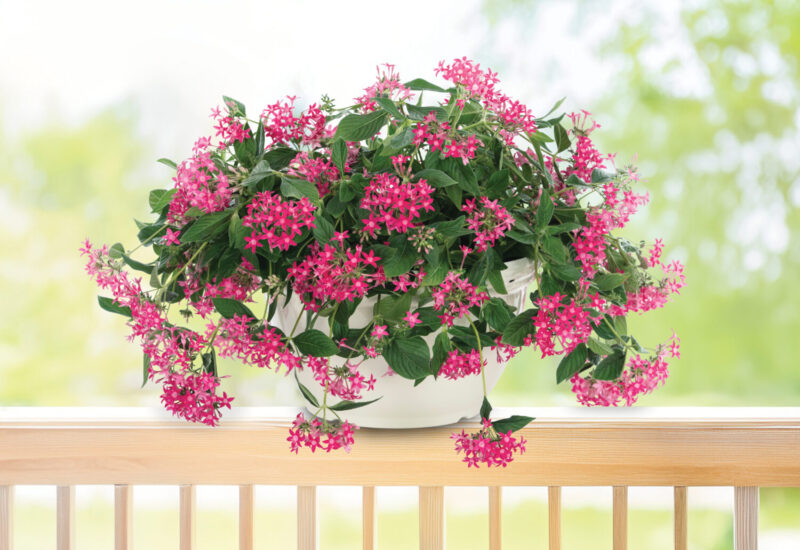
It’s not just trailing — it’s trailblazing. The pentas Graffiti Falls series expands Benary’s top-performing Graffiti pentas line with a bold new twist: a true trailing habit backed by superior summer durability. Bred to thrive in high heat and full sun, this 2025 introduction delivers saturated blooms, dynamic form and dependable performance — giving growers innovative new options for baskets and combos that hold up through the season.
Its adaptability to intense summer heat echoes the dependable traits of the upright Graffiti series, while its trailing habit introduces fresh opportunities for retail presentation and combination creativity. During trials and trade events, reactions ranged from: “What a fascinating plant!” to “Did someone forget to water this?”— a nod to its unexpected but intentional prostrate form.
A NEW DIRECTION IN SEED PENTAS
All jokes aside, the prostrate habit is intentional — and it’s what sets Graffiti Falls apart. Once the plant reaches sufficient height, the stems begin to naturally trail, creating a full, draping effect unlike anything else in seed pentas.
Though its early growth stage may appear unconventional, Graffiti Falls quickly fills out and transforms into a striking, flower-laden display. As the season progresses, the plant only improves with bold color, a lush trailing habit and reliable summer performance that distinguishes it in trials across the country.
 BREEDING OUTLOOK
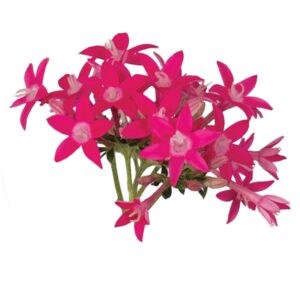
The series launches with a single introduction: ‘Graffiti Falls Rose,’ a saturated, deep rose hue chosen for its strong visual impact and performance. Additional colors are in development, with this debut offering growers a preview of the habit’s potential across a full palette that allows them to observe and plan how it fits into their own programs.
PRODUCTION TIPS FOR SUCCESS
Germination
Pentas lanceolata Graffiti Falls closely follows the same culture of traditional seed pentas. Sow one seed per cell, uncovered, and maintain saturated media (moisture level 5) with relative humidity above 95% for the first 10 days or until radicle emergence is observed.
To optimize germination success, use tempered water above 64° F and ensure substrate temperatures remain above 61° F.
It’s also critical to prevent the media from drying out before the pellets dissolve and crack — early moisture consistency is key to uniform emergence.
Post-radicle emergence
You can begin slowly reducing moisture and humidity allowing the plants to adapt to the environment. Once you feel comfortable, reduce temperatures down to about 72° F, increase your daily light integral (DLI) to 6–8 mol·m²·day and begin feeding at 50ppm nitrogen until post-cotyledon expansion, which is typical in week 3 of plug growth.
Post-cotyledon expansion
Begin gradually reducing moisture levels and humidity to help seedlings acclimate to their environment. Once roots are established and seedlings are stable, lower temperatures to approximately 72° F, DLI to 6–8 mol·m²·day, and initiate feeding at 50 ppm nitrogen. Continue this regimen through cotyledon expansion, which typically occurs around week 3 of plug development.
 GROWING ON
Monitoring pH
Maintaining proper pH levels is critical during the growing-on phase, as Pentas lanceolata tend to release hydrogen ions (H+) into the substrate, which can gradually lower media pH over time. Aim to keep substrate pH between 6.2 and 6.5; values up to 7.0 are generally acceptable.
Potential issues by pH range
- Low pH (< 6.0):
◦ Iron toxicity: Marginal burn in new growth
◦ Iron/Manganese toxicity: Brown or tan lesions on foliage
- High pH (> 7):
◦ Calcium and magnesium deficiency: Symptoms include interveinal chlorosis on lower leaves and foliar puckering
Maintain a moisture cycle between wet (4) and medium (2) throughout the crop cycle. Prolonged periods of saturated substrate can significantly increase the risk of botrytis, rhizoctonia and pythium infections. To mitigate these risks, it is advisable to apply preventative fungicides targeting these pathogens, especially during extended periods of low light and high humidity.
Pentas do not have a strict upper temperature threshold; however, temperatures below 60° F can lead to reduced flower production and stunted growth. This should be taken into consideration when preparing plants for retail environments, particularly those with cool overnight temperatures or early spring sales.
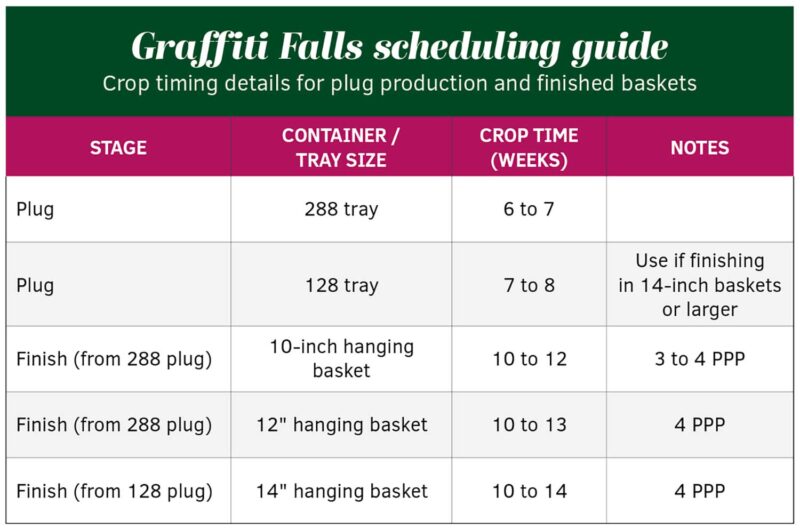
While pentas Graffiti and Graffiti Falls share many similarities, growers should plan for a longer finish time with Graffiti Falls — especially in spring. Allow up to four additional weeks during spring production to ensure baskets have time to fully develop their trailing habit and begin flowering. In warmer summer conditions, the plant finishes more quickly, and the additional grow time may be reduced.
 ADDITIONAL TIPS SPECIFIC TO GRAFFITI FALLS
Ensure proper spacing: Adequate spacing is essential to maintain the natural trailing habit of Graffiti Falls. Allow approximately 0.5 to 1 inch of space between leaves to prevent upright or stretched growth. Crowding can result in vertical elongation, reducing the cascading effect that makes this variety unique.
Hanging baskets: For best results, hang Graffiti Falls up high during production for optimal light and heat accumulation. This encourages strong trailing development and ensures the plant reaches its full visual impact at retail.
Top-node pinching: Pinch the terminal node approximately two weeks after transplant to encourage increased flower count and fuller baskets at finish. Keep in mind this practice may extend overall crop time by one to two weeks.
Mixed combination: Graffiti Falls thrives in mixed containers, especially when paired with heat- loving companions like dichondra or upright growers such as vinca. Its habit adds texture and movement, making it a dynamic component in summer combos.
PGR RECOMMENDATIONS
Atrimmec can be applied at 1.0 to 1.5 fl oz per 100 gallons as chemical pinch.
Daminozide can be used at 2,500 to 5,000 ppm to reduce internode elongation.
Please note that chemical efficacy and application rates can vary by region and seasonal conditions. We recommend trialing PGR treatments to determine the best program for your specific growing environment and production schedule.
Photos courtesy of Benary.

 Video Library