






Spring forward, pest-free
Spring typically marks the busiest and most challenging season for ornamental growers. Many operations have a large variety of plants in production, while rising temperatures pose an additional threat that increases the risk of disease and insect infestations.
There are two critical elements to protect your greenhouse operation against pests: scouting and proactive planning.
IDENTIFY COMMON INSECT THREATS
Routinely scouting for signs of disease and insect populations is essential for preventive control. Whether it’s aphids, thrips, or other common insects, establishing a thorough understanding of characteristics will help you take swift action to minimize plant damage.
Aphids
Aphids are soft-bodied insects that range in color from greenish-yellow to dark green, dark brown, and black. The fast development time from young nymph to adult, especially in warmer conditions, means populations can build quickly. Aphids are often found feeding in groups on new growth but can also be found on stems, buds, and lower leaves. They use piercing mouthparts to extract fluids from stems, leaves, and other plant parts, which leads to distorted growth.
Thrips
Thrips are tiny, elongated insects that are attracted to flowering plants and feed on pollen and flower petals. They scrape and pierce plant tissue, then suck out the sap and cellular contents from leaf tissue, flower buds, and/or unexpanded shoot tips. This can cause leaf stippling (silvery streaking), scarring, and distortion.
Fungus gnats
Warm, wet conditions are favorable for fungus gnat development. While adult fungus gnats are primarily only a nuisance, the larvae feed on plant roots and stems, allowing soilborne pathogens to enter and cause disease. Adults are dark, mosquito-like insects with long legs, one pair of clear wings, and a Y-shaped vein in the wing pattern. Larvae are legless, thread-like, and transparent. Infected plant symptoms may appear as sudden wilting, loss of vigor, poor growth, yellowing, and foliage loss.
Whiteflies
Much like aphids, whiteflies are small insects that feed on plant sap. Adults have powdery, white wings and piercing-sucking mouthparts, which are inserted in the phloem and extract plant sap, affecting the overall vigor of plants. They do not have a dormant stage, so in climates where there are winter freezes, whiteflies can be year-round pests in greenhouses.
KNOW SIGNS OF DISEASE
As with insects, it’s vital to recognize the appearance of common greenhouse diseases when scouting. Taking prompt action at the first signs of infection will reduce or eliminate the pathogen before it spreads.
Bacterial leaf spots

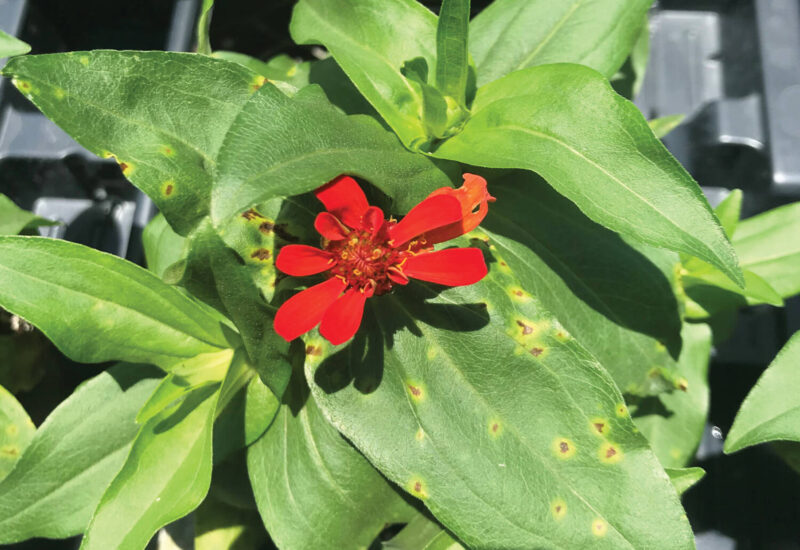
Leaf spots can be caused by a variety of pathogens, including Alternaria solani, Cercospora spp., and Xanthomonas spp. They vary in shape and size but tend to be more rounded in appearance and typically have distinct margins with a colored border. Warm, humid conditions are favorable for disease development, which means that propagated plants under mist in greenhouses make prevention more difficult.
Powdery mildew
Powdery mildew is one of the most common ornamental crop diseases in late spring to early summer. The fungi form white, talcum-like spots called colonies on leaves, stems, and flowers. Over time, colonies increase in size and number to cover the plant’s surface.
If not controlled, severe infections cause leaves to turn yellow, brown, and then drop, resulting in reduced plant vigor and growth. While powdery mildew is often first observed on the upper surface of the leaves, both sides may develop colonies, so it is important to check the entire leaf when scouting.
Rust
Rusts are caused by fungi that produce colored pustules on infected leaves and stems of plants. While infected plants are not usually killed by rusts, they diminish the overall appearance and marketability. When monitoring for rusts, look for pustules that range in color from red, orange, brown, or creamy white, depending on the pathogen.
AGRONOMIC PROGRAM PLANS
In addition to routine scouting, implementing a comprehensive agronomic program targeted at common insects and diseases allows growers to take control proactively by rotating products and modes of action. A well-designed plan leverages the strengths of different products at the most critical times to maximize effectiveness and minimize resistance.
When building your agronomic plan, consider fungicides such as Mural and Postiva, and insecticides like Mainspring Xtra, the latest solution from Syngenta with two active ingredients to provide fast knockdown of chewing, sucking, and soil-dwelling insects.
By prioritizing scouting and adopting a well-structured agronomic program, you can stay one step ahead of warm-season pests and protect your greenhouse operation. Preparation and proactive management are your strongest allies in maintaining healthy plants and a successful operation, even during the most challenging times of the year.

 Video Library