








Smart controls for practical greenhouse production
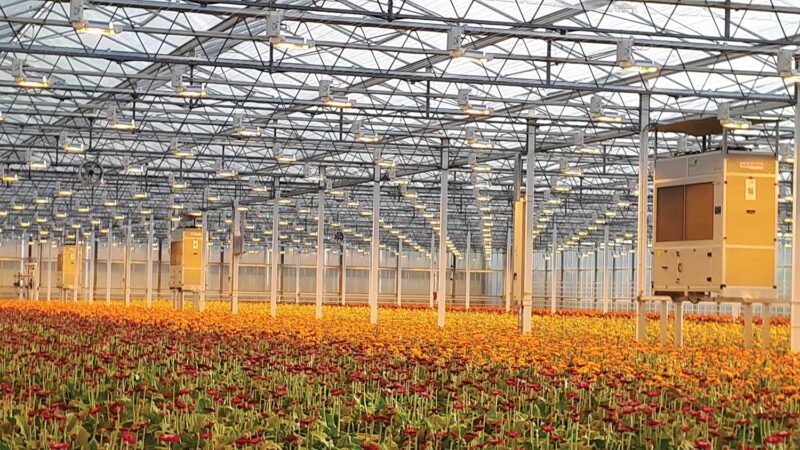
For plant life to flourish, it needs an optimal temperature, and often that temperature is quite balmy. What this means for greenhouse owners is it’s necessary to invest in consistent climate control — something that can require a significant energy expense.
To mediate that cost while still ensuring ideal growing conditions, growers must optimize their thermal efficiency. Thermal efficiency refers to the way in which a greenhouse heating or climate control system converts energy into useful heat. When thermal efficiency levels are high, it means the system can produce adequate heat without a great deal of undue energy loss. To put it differently, thermal efficiency is inversely proportional to energy waste.
WHY THERMAL EFFICIENCY MATTERS
While the ideal greenhouse temperature can vary depending on the types of plant life being cultivated, most growers view 80° F as a sweet spot — and in many regions of the country, that’s a tough temperature to maintain outside of the dog days of summer.
While heaters can be used to promote the ideal growing temperature, running any kind of climate control can be expensive, as well as wasteful. Greenhouses lose heat and energy for a number of reasons, foremost among them:
Conduction
Heat can escape through greenhouse walls and roofing, especially when single-pane glass and other poorly insulated materials are used.
Convection
Warm air rises and may escape through vents or gaps near the greenhouse roof; meanwhile, cold air enters, causing the ambient temperature to drop.
Infiltration
Heat may also escape through poorly sealed cracks, vents or doors.
When the internal temperature is inconsistent, it may interfere with healthy plant growth, and attempts to maintain a consistent temperature amidst low thermal efficiency can cause greenhouse expenses to skyrocket. For the typical greenhouse, heating costs account for almost a third of total operating expenses, but a focus on efficiency may keep those costs in check.
HOW TO PROMOTE THERMAL EFFICIENCY
To sustain the highest possible level of thermal efficiency, greenhouse growers can remember a few best practices.
Ensure proper insulation
First and foremost, construct a greenhouse with insulating materials, mitigating heat loss via conduction. Standard recommendations include double-layered polyethylene or polycarbonate panels. Thermal screens can also slow heat transfer through conduction.
Seal gaps
Identify and seal any gaps that surround doors and windows, using caulk and weather stripping to create superior insulation.
Invest in energy-efficient heaters
When it comes to promoting thermal efficiency, some heaters are better than others. For greenhouse spaces, high efficiency gas unit heaters can be especially useful, ensuring consistent heat for a reduced cost.
Invest in heat retention
Greenhouse elements such as water barrels or stone structures can actually help to absorb heat during the day and release it at night, potentially giving a significant boost to the facility’s thermal efficiency.
Thermal efficiency is an important metric for greenhouse growers looking to be productive without generating huge amounts of wasted energy, and with the right strategy, optimal thermal efficiency is something that growers can actively cultivate.
Sidebar: The climate control equation
Effective and efficient climate control is about gaining as much control and precision at the lowest operational cost, said Rom Meir, content manager at DryGair Energies. If you are able to optimize the three main factors your plants require — temperature, humidity and radiation — you will have improved results overall, but the challenge can be to gain full control without overspending, he said.
“With that said, the most important thing to consider is energy efficiency,” Meir said. “Energy is a major expense, and advanced climate control systems require a steady stream of energy.”
Meir provided an example involving dehumidification. Growers should consider how much moisture the system extracts per kWh, and also note the design conditions manufacturers present in their information, he said. Also, at higher temperatures and relative humidity levels, a dehumidifier will extract more water, so make sure it’s a fair comparison.
Uniformity is another critical part of climate control that is commonly overlooked.
“Oftentimes, you’ll see a greenhouse with advanced control equipment struggling to maintain optimal conditions and dealing with issues such as mold,” Meir said. This is from lack of uniformity in the space. “If some of your crops experience high humidity, it doesn’t matter that most of the space is kept at 80% — you’ll likely still be facing mold outbreaks,” he said.
Learn more about optimizing your climate control systems at drygair.com.

 Video Library
Latest News
Ag wage coalition pushes permanent H-2A reform
UF IFAS expands greenhouse online courses