

Control Remotely
GrownSpan’s Patrick Mahoney shares the benefits of remote greenhouse controllers and automating your greenhouse.





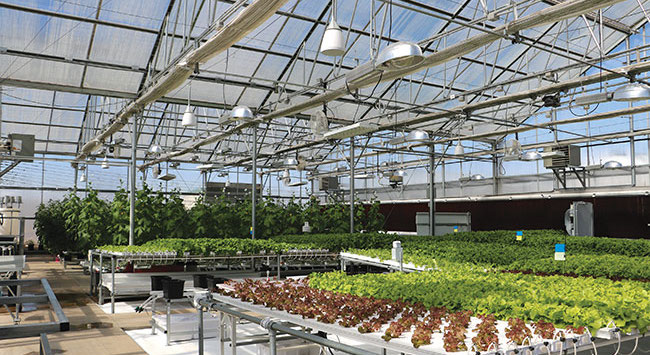
Through these developments, greenhouse controllers have emerged at the forefront of indoor growing practices. With a greenhouse controller, growers can synchronize all of their systems for easier management, helping them control every aspect of their operation from one interface. Controllers also play an integral role in data collection by allowing growers to gather information from every harvest and constantly improve the quality of their crops.
For any operation, a greenhouse controller can provide a decisive solution to labor costs, inferior yields and a number of other inefficiencies.
Efficiency and Decreased Labor
Although labor requirements and operational efficiency are always going to be challenges for commercial growers, the latest greenhouse controllers are designed to help alleviate the stresses of manual labor and create a more streamlined operation.“Controllers’ technology has advanced dramatically in the last few years,” explains Adrian Valois, a greenhouse specialist for GrowSpan Greenhouse Structures. From a time and effort standpoint, modern controllers provide the ultimate convenience for greenhouse growers.
Smart controllers give growers access to their crops even when they’re not at their greenhouse. At any time and from any place, growers can monitor every component of their operation. By linking to smartphones or laptops, the controllers send feedback on environmental changes, ensuring systems are running correctly at all times and further reducing labor requirements.
While controllers do provide a solution to excessive labor and inefficiencies, Valois emphasizes they are “only as good as the person programming it.” Growers need to understand the necessities of their crop and take the time to fully comprehend their controller.
By failing to use every tool at their disposal, growers prevent their operation from reaching peak profitability. It’s important that growers set a plan with their controller before they start growing, and make sure they are prepared to implement automated systems.

Operational Costs and Sustainability
In addition to work efficiency, greenhouse controllers can also optimize energy usage. For growers worried about sustainability and keeping utility bills as low as possible, automated systems offer a solution to both problems.In greenhouse operations, it’s easy to lose track of what equipment is running and at which times, an error that leads to wasted money and energy. Valois says, “Controllers and automation are key to the success and optimization of crop production. They help the greenhouse equipment run at the most efficient rate possible.”
If equipment runs only when necessary, crops benefit from the appropriate amount of environmental influence, and operations profit from limited waste, like irrigation runoff or excessive electricity usage.
Operational costs can vary, but energy usage is generally one of the top three expenses for greenhouse growers, along with labor and plant materials. With individual controls, some energy conflicts cannot be prevented, like running exhaust fans when the heater is on or operating fans while adding CO2 to the environment.
When growers use a central greenhouse controller, they can optimize their systems to prevent such conflicts. Even a basic controller can provide control over several components, but a more sophisticated controller gives growers total influence over their greenhouse’s environment.
Advanced models can include up to eight or nine outputs, meaning they can monitor up to nine different automated systems.
Additionally, they can react to the environment and make changes on their own, using the help of sensors and a weather station to maintain the ideal climate for a grower’s crops. The right greenhouse controller will assist an operation in reducing their energy costs and their overall carbon footprint.

Improved Yields
Profits are largely affected by the size and quality of a harvest, and fine tuning a greenhouse’s environment is key to producing more robust yields. This means keeping temperatures within a specific range, automatically turning systems off or on and keeping more sensitive factors in check, like humidity. By monitoring specific metrics in the environment, a controller allows growers to gear their climate toward a crop’s specific needs, creating higher-quality product that requires less personal attention during production.After each harvest, the best controllers will also provide growers with data collection that can help them improve future production strategies. “Data is one of the most important aspects about efficiency in a greenhouse operation,” explains Valois. “Growers should always be comparing their output with the environmental data they collected. This will help them understand what was happening inside the greenhouse when they had a great harvest, so that they can replicate it or change things if their output wasn’t optimal.”
It’s also important to note how controllers can help protect a grower’s crops. When growing more finicky plants, it’s easy for humidity and excess moisture within a greenhouse to get out of control. By allowing growers to determine the temperature and humidity level they need, a controller mitigates the worry of mold and disease proliferating on plants.
These factors equate to sustained, high-quality yields and increased profits over time. When properly used, a greenhouse controller can pay for itself in no time at all, and help growers put out a superior product to their competitors.
By employing data collection, sustainable growing practices and complete environmental control, growers can boost their production without inflating operating costs or labor requirements. A greenhouse controller helps tie everything together, producing an automated operation that is set up for years of profitability.
Patrick Mahoney works for GrowSpan Greenhouse Structures. For over 40 years, GrowSpan has been providing the horticulture industry with high-quality growing structures. For more information visit www.growspan.com.